






In 1991, two things happened that had nothing to do with each other.
Or so it seemed.
Somewhere in Italy, the first owner of a brand-new Ferrari F40 collected it, drove it 69 kilometres home and parked it. And in Stevenage, a town about thirty miles north of London, a father bought his six-year-old son a radio-controlled car.
The boy was good with it, good enough to finish second in the national championship the following year. The Ferrari, meanwhile, did nothing at all.
It would take thirty-five years for the two of them to meet.
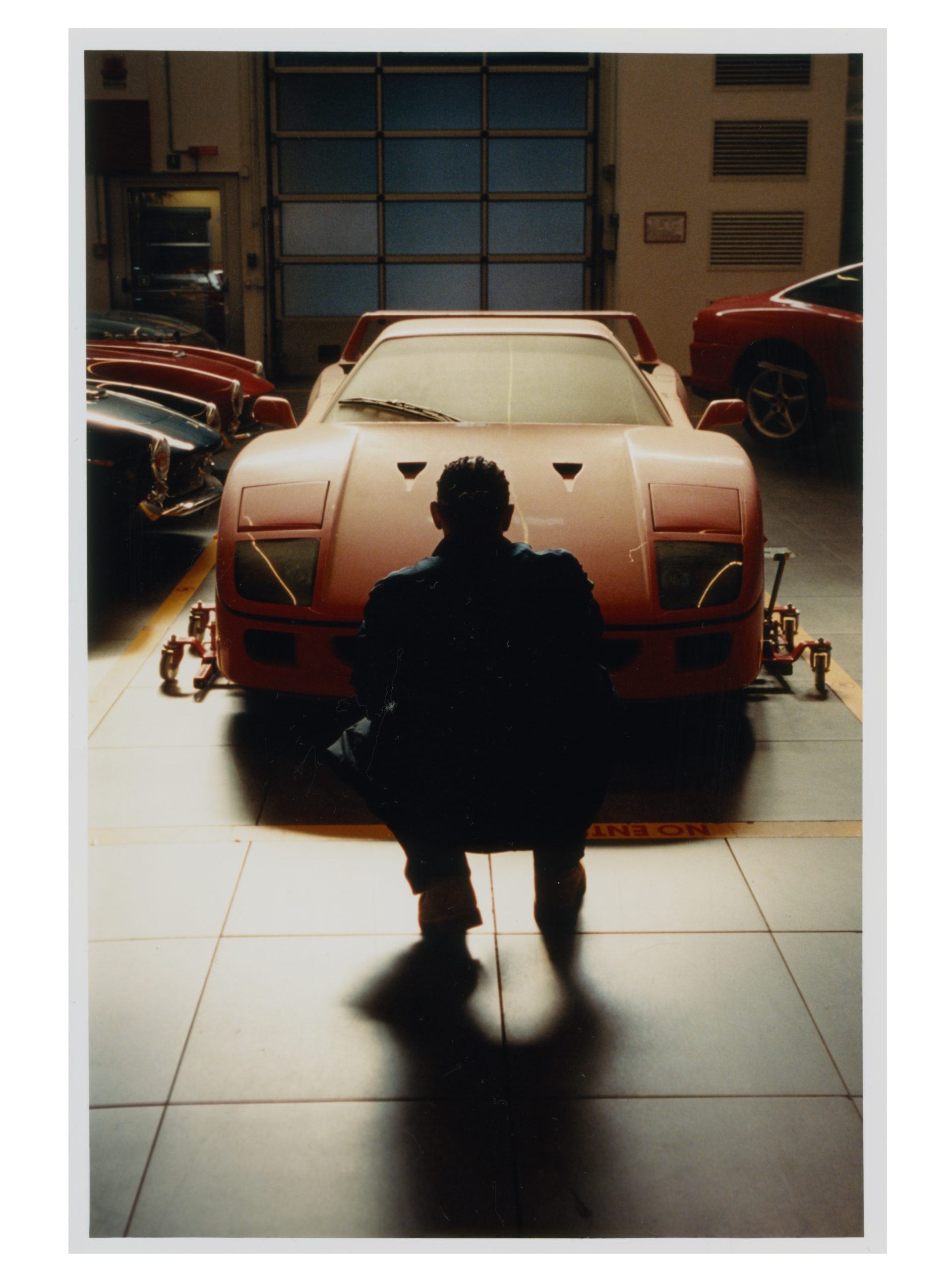
The boy was Lewis Hamilton. The F40 is his now, and it spent all that time in the same garage, untouched.
To understand why a seven-time world champion would want one so badly, you have to go back to the summer of 1987. On 21 July, an 89-year-old Enzo Ferrari shuffled to a table at the civic centre in Maranello to show the press a car built for his company’s fortieth birthday. He hadn’t given his engineers much of a brief, and he hadn’t given them much time.
“A little more than a year ago, I expressed my wish to the engineers. Build a car to be the best in the world. And now the car is here.”
They had done it in less than a year, and he had largely left them alone to do it. The engineering was in the hands of Nicola Materazzi, the turbo specialist who had worked on Ferrari’s Formula 1 cars, and the body was drawn at Pininfarina by Pietro Camardella. The room was full of the world’s motoring press, and Ferrari had kept the project so secret that almost nobody knew what was coming. When they saw it, the room broke into applause. Not everyone was won over, though. Dennis Simanaitis of Road & Track loved the way it looked, but others called it cynical: a car built to cash in on the money speculators had been paying for used 288 GTOs and Porsche 959s.
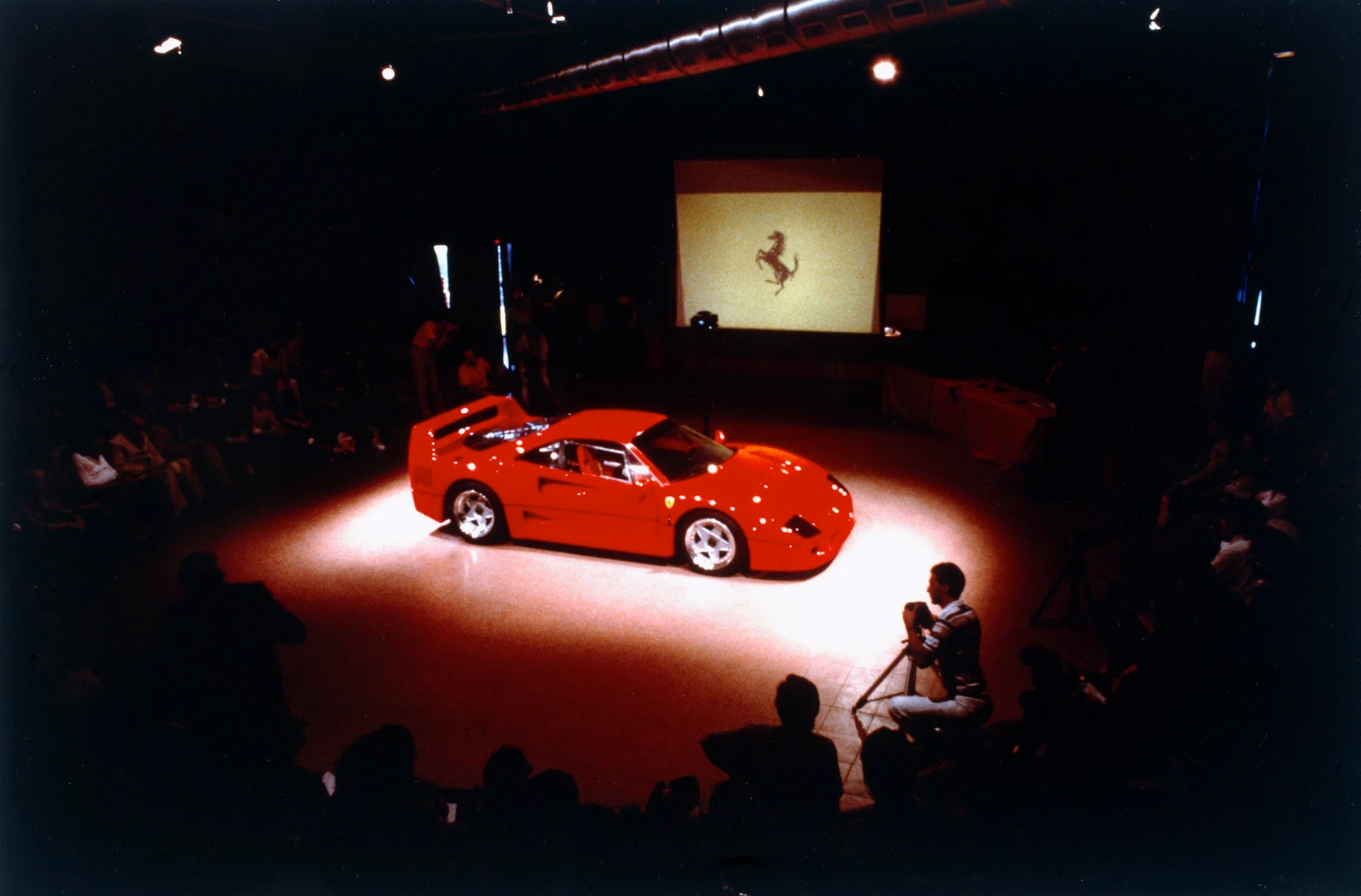
The F40 was barely a road car. The body was Kevlar and carbon fibre, so thin in places you could see the weave beneath the paint. There were no carpets to speak of and no interior door handles. To get out you pulled a wire. Through the slatted cover over the engine you could look straight down at a 2.9-litre twin-turbo V8 making 478 horsepower, in a car weighing about 1,100 kilograms dry. It was the first production car to pass 200 miles an hour. Ferrari planned to build 400. People wouldn’t stop asking, and in the end there were 1,311. Gerhard Berger, who was racing for Ferrari in Formula 1 that year, called it very easy to drive, as long as you were already used to racing cars.
LAP 29 file
- Delivered
- 1991
- Kilometres
- 69
- Years parked
- 35
- Engine
- 2.9-litre twin-turbo V8
- Power
- 478 PS
- Top speed
- 324 km/h, the first road car past 200 mph
- Built
- 1,311 F40s, against a plan of 400
It was also the last new car Enzo Ferrari presented. He died in August 1988, aged 90 and a little over a year after the unveiling in Maranello, having spent more than four decades building the cars that carried his name, from the first Ferrari in 1947 to this one.
Many buyers treated it as an investment more than a car. Prices climbed over the following years, and by 1990 it was estimated that only one in ten delivered F40s was actually being driven. Hamilton’s, parked after 69 kilometres, was an extreme case of something that was already common.
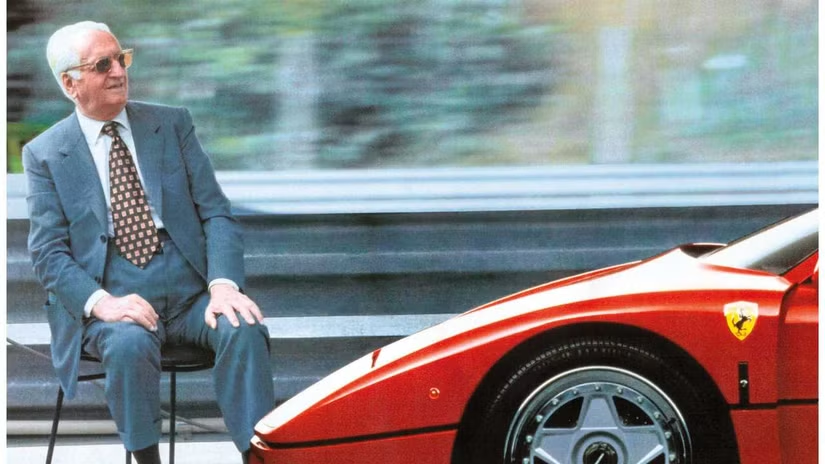 Enzo Ferrari and his last car
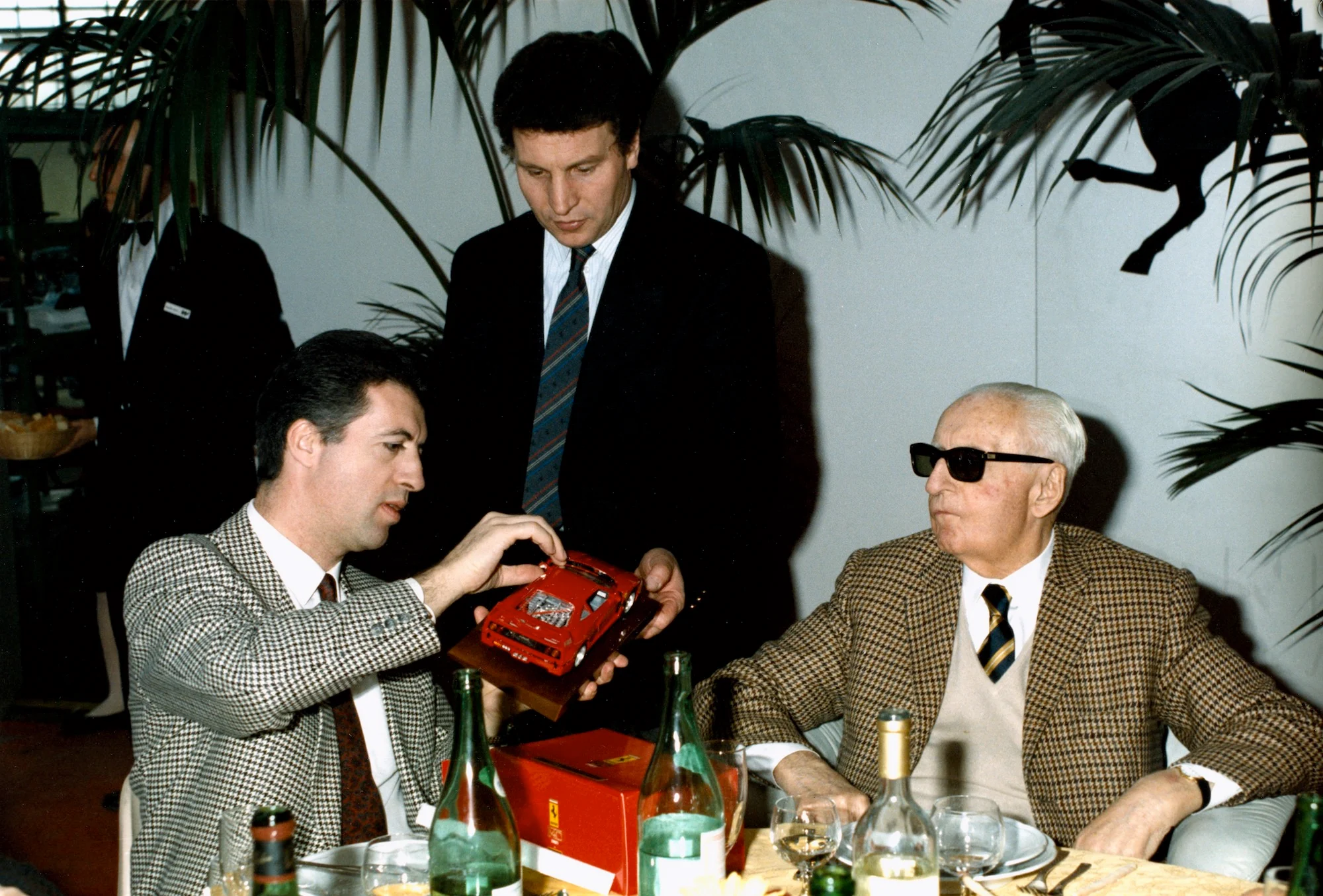 With his son, Piero, in 1987
He never got to see what it became. It didn’t take long for the F40 to become the poster on every bedroom wall, and the car in the garages of people whose faces were on other people’s walls.
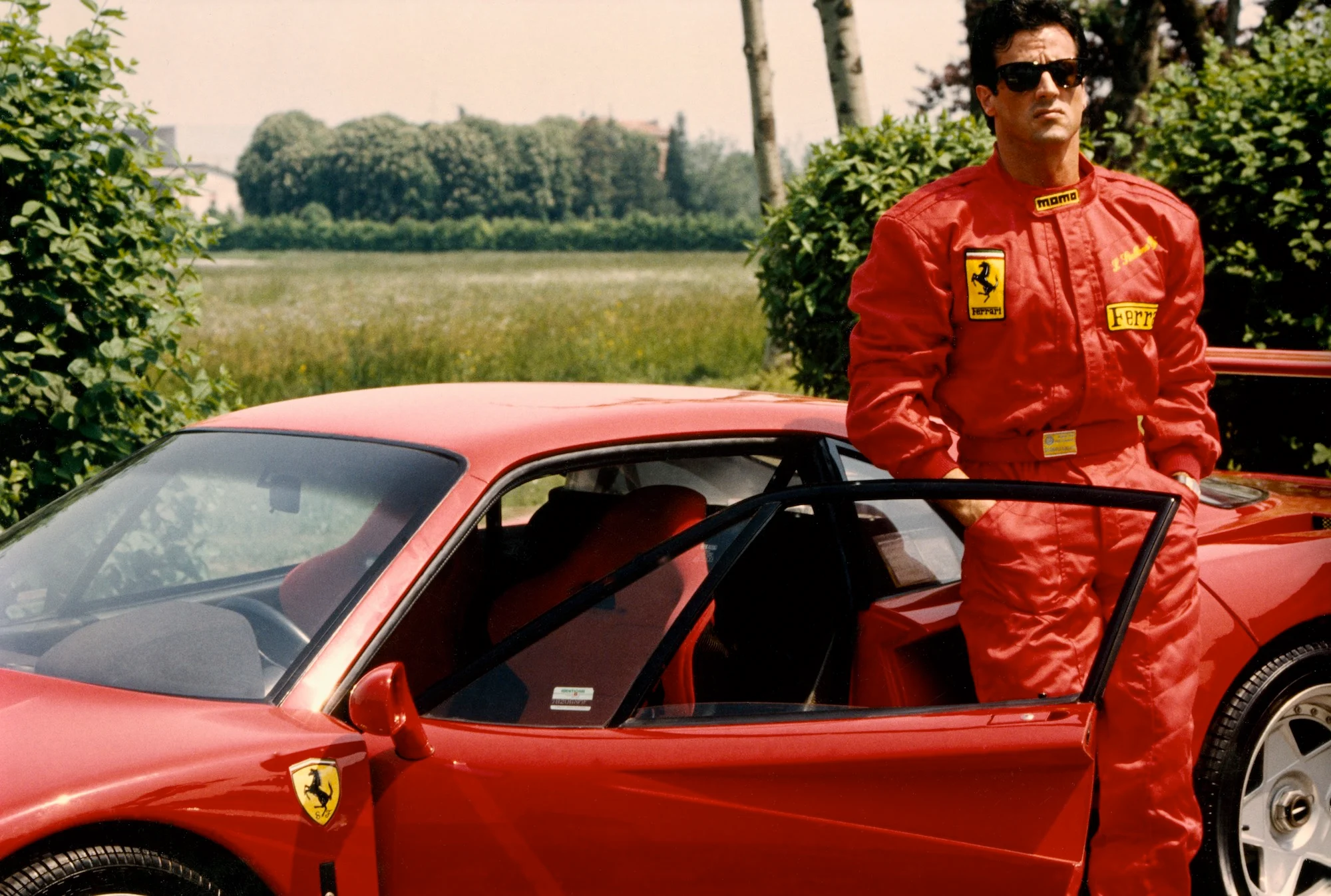
Sylvester Stallone came to Fiorano in 1990, in the middle of the world tour for Rocky V, drove a brand-new F40 around Ferrari’s test track and later bought one. Pink Floyd’s Nick Mason and David Gilmour collected theirs from the factory in October 1988, and Mason still has his. Rod Stewart had one of only 213 F40s built to American specification. AC/DC’s Phil Rudd, who went straight out and bought his first Ferrari when Highway to Hell went multi-platinum, owned a 1991 F40, the same year as Hamilton’s. In nearly ten years he drove it about 500 kilometres.
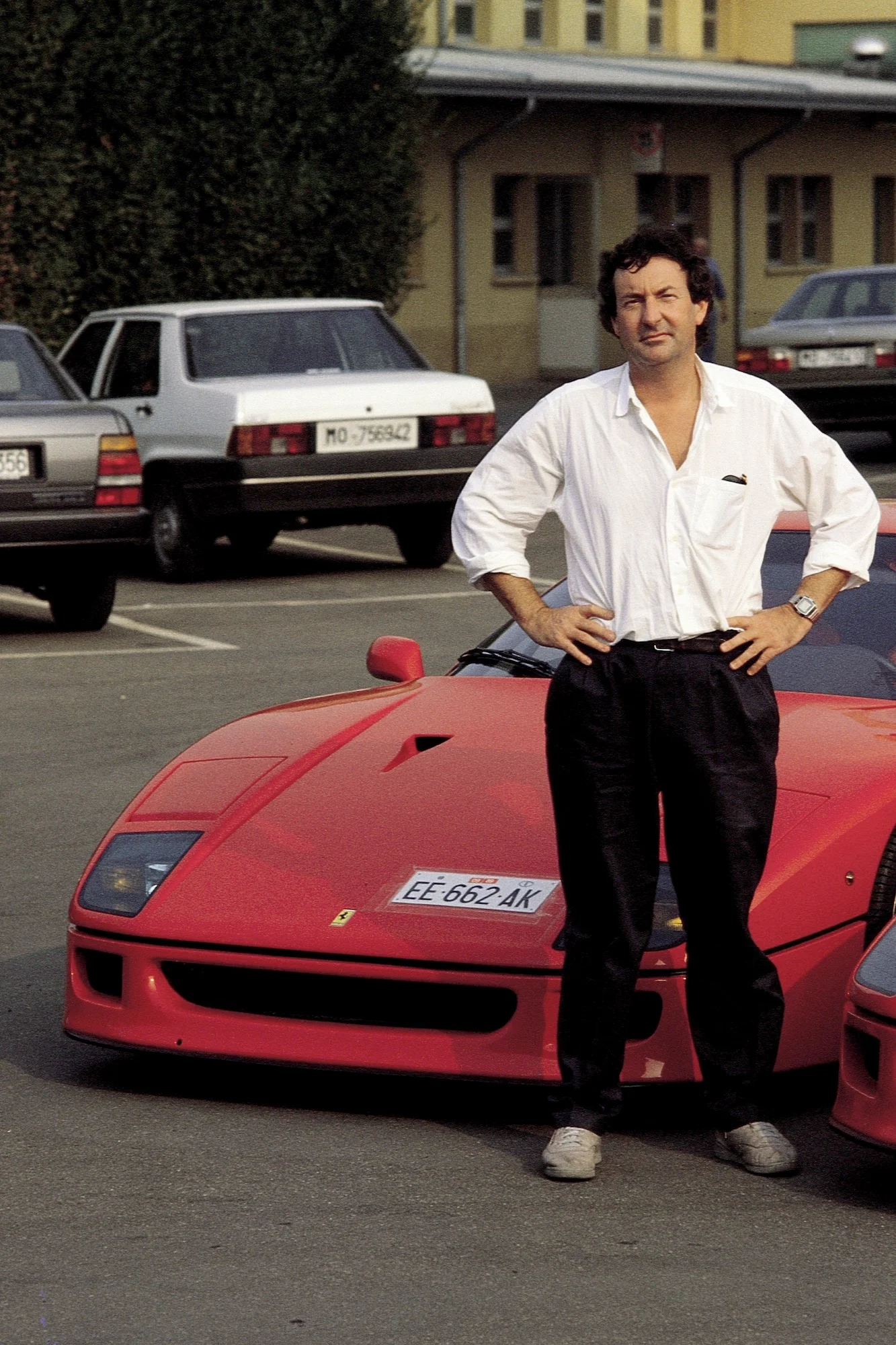
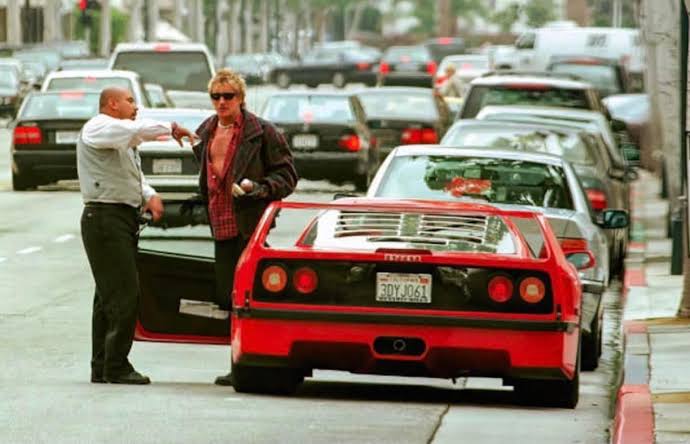
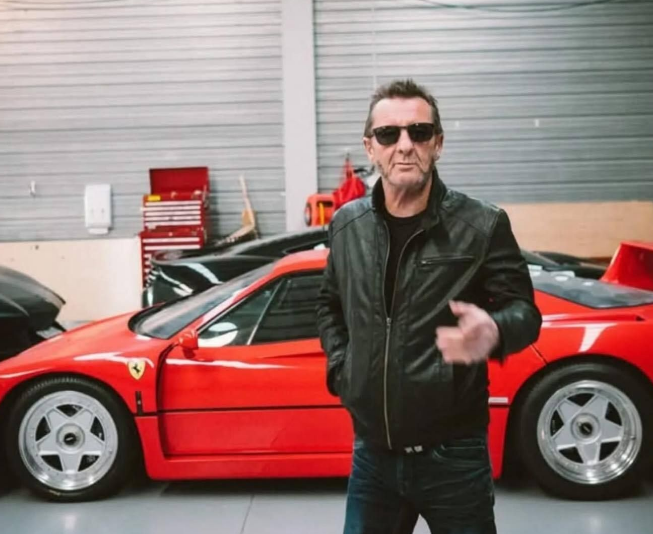
Mason’s car went on to have the most famous screen career of any F40. He registered it as F40 NPG, and in 1996 he lent it to Jamiroquai for the video to Cosmic Girl.
It was shot at Cabo de Gata, on the coast of Andalusia, and it is everything an F40 was built for: Jay Kay in his purple Lamborghini Diablo, with a Ferrari F355 and Mason’s F40 chasing him flat out through the hills. Real cars, real roads, real chaos. One Diablo was wrecked before filming even began, and a precision driver later sent a camera off a cliff and through the windscreen of its replacement.
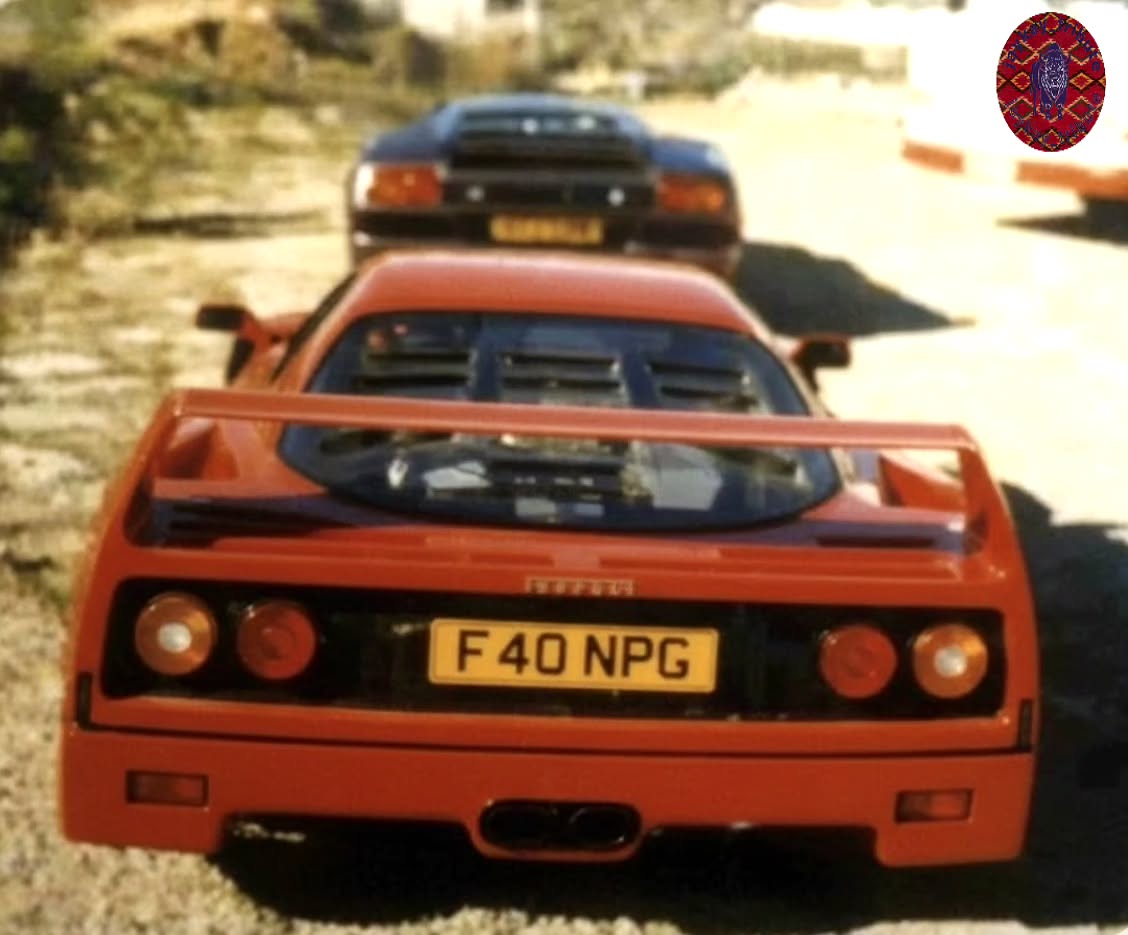 F40 NPG, on set
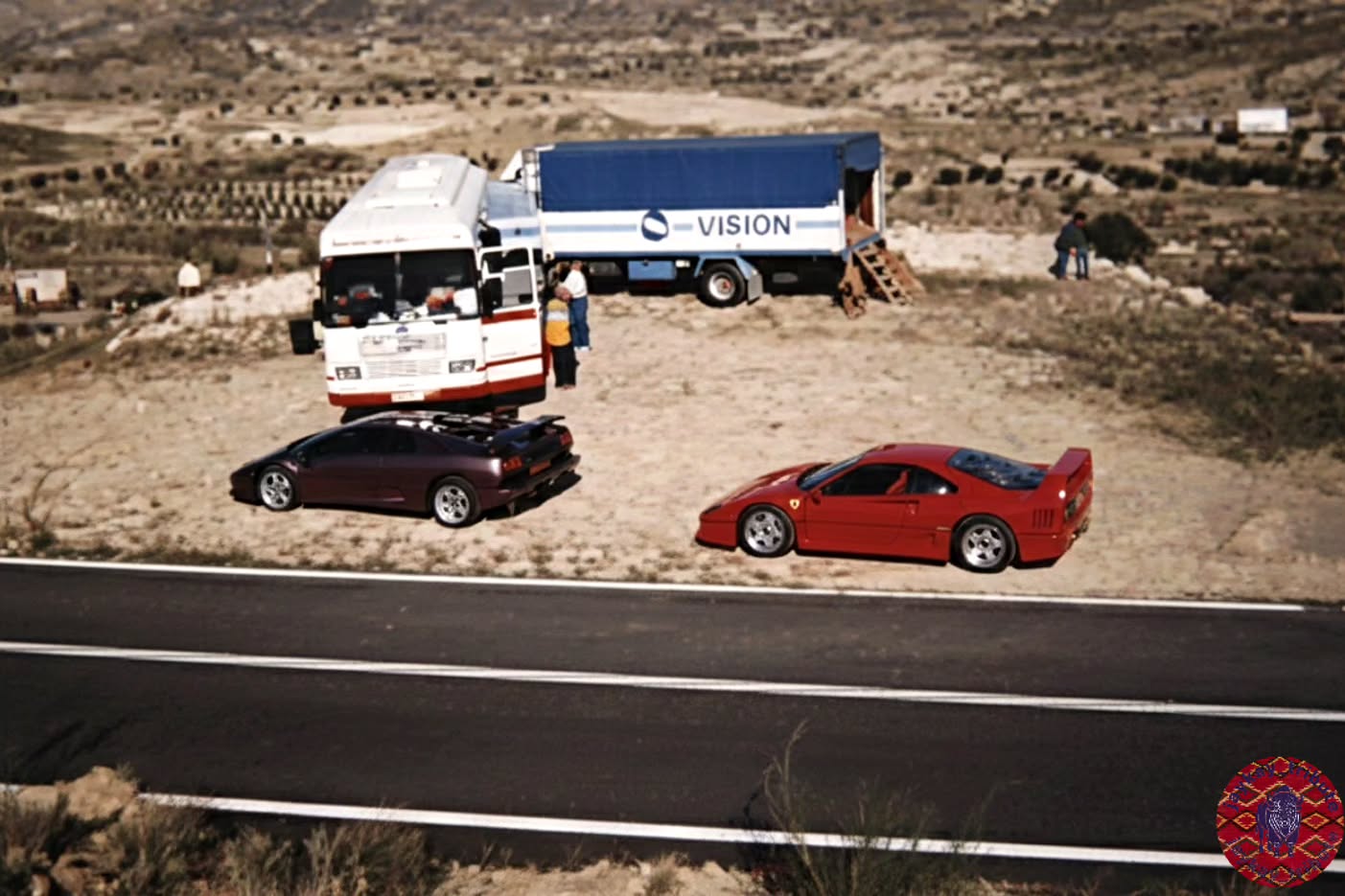 Between takes
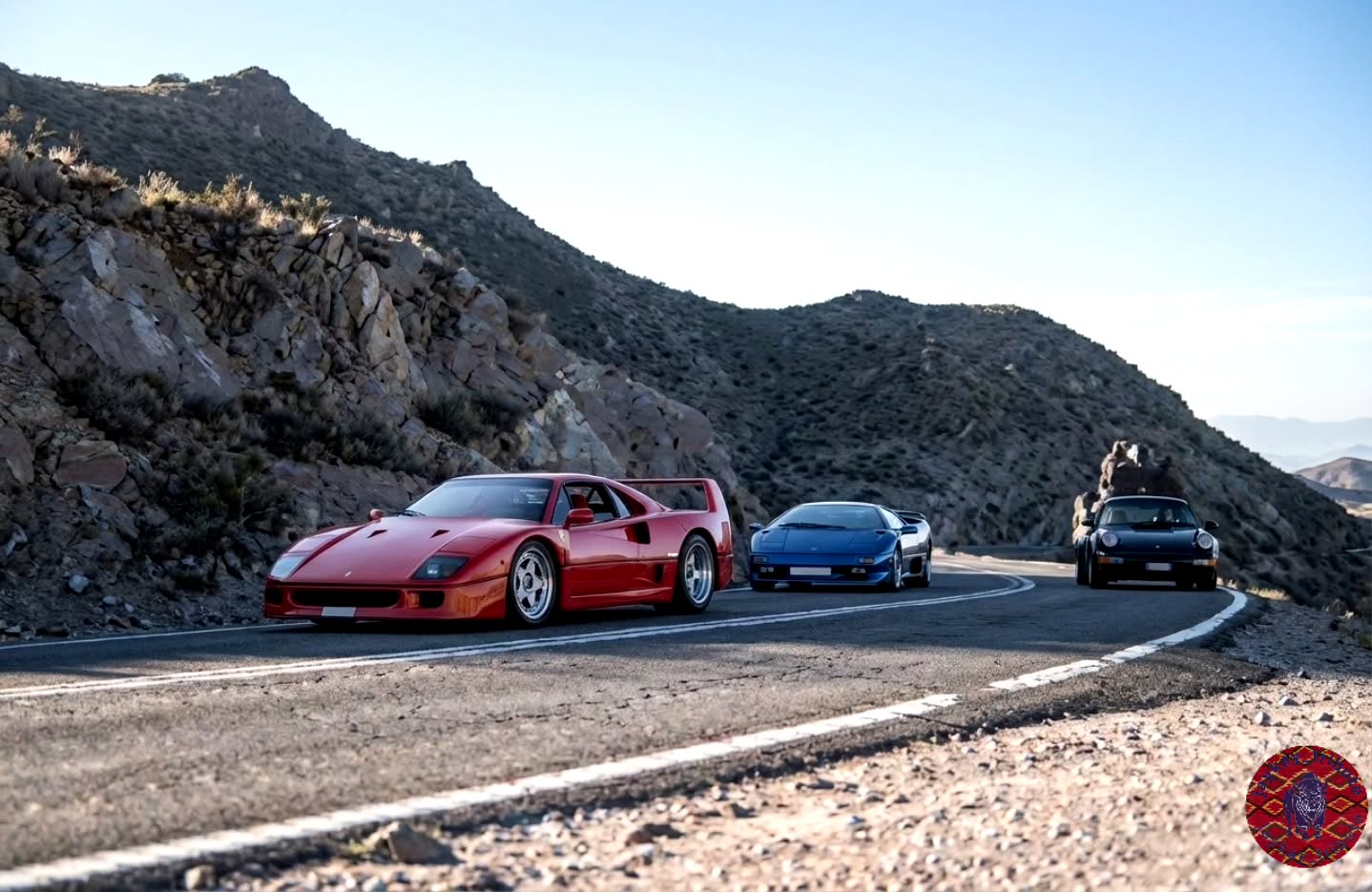 The chase, Cabo de Gata
That same year, Hamilton’s F40 still hadn’t turned a wheel. Mason’s was out in the hills doing exactly what Enzo Ferrari built it for. Hamilton’s was still waiting, while the wanting passed down to a new generation.
Kids who had never seen an F40 in the metal grew up with it in racing games and on MTV in Cosmic Girl, and some of them grew up to own one. One of them is Tyler, the Creator, who was born in 1991, the year the first owner collected the car Hamilton would later buy. In the video for Stop Playing With Me, he stands next to his own and raps “F40, this the brand-new coupe.”
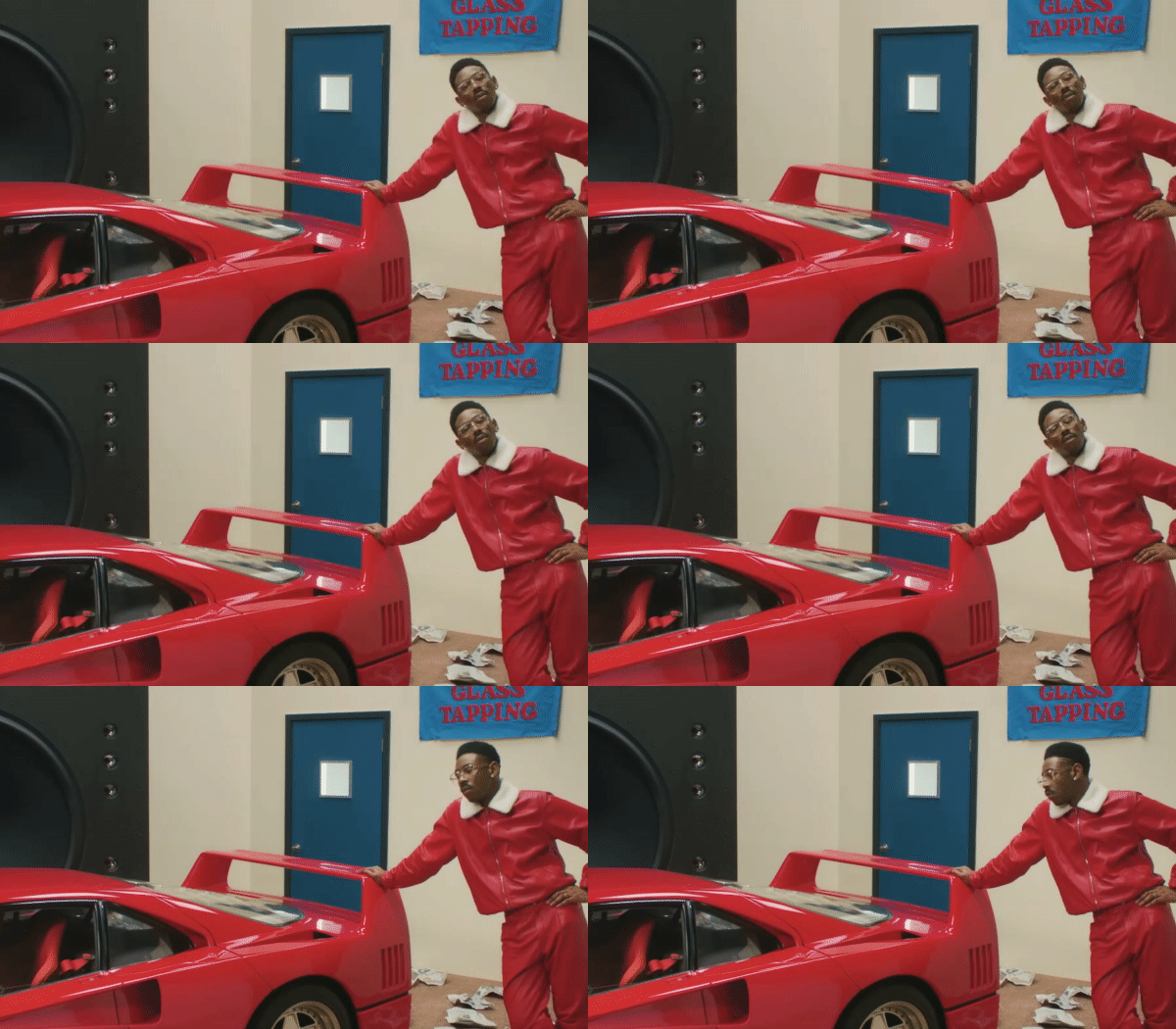
He doesn’t keep it for videos, either. His F40 gets driven around Los Angeles often enough that clips of him at the wheel keep turning up online. When Pharrell filmed him out on the road in it, he summed it up from behind the camera: “A lot of ya’ll talk, Tyler lives it. Ferrari life.”
At the 2026 Grammys, a red F40 even made it onto the stage: in the middle of his performance, he climbed into it. Nearly forty years after Enzo Ferrari unveiled the car in Maranello, it still means the same thing to people who weren’t even born when it came out.
Even Oscar winners can’t resist it. Michael B. Jordan was spotted behind the wheel of a red F40 in London while filming The Thomas Crown Affair, and during Monterey Car Week, Ferrari’s American account posted a clip of him leaving Casa Ferrari in Carmel in one, with a line anyone who has stood next to an F40 would understand: “A Ferrari F40 that seemed a shame to leave behind.”
For most of the people who loved it, though, the F40 only ever existed on a bedroom wall. In Stevenage, Lewis Hamilton was one of them. His side of the story is less glamorous, and better for it. Supporting a son who raced was expensive, and Anthony Hamilton took redundancy from his job as an IT manager to work as a contractor, sometimes holding down three jobs at once so he could still make every race.
When Lewis was eight, his dad found an old kart and rebuilt it. Before their first race they needed a number, and Anthony didn’t know what to put. So they took it from the registration plate of the family car, a red Vauxhall Cavalier first registered in March 1989, about as ordinary as a British family car got. The plate read F44 HMA.
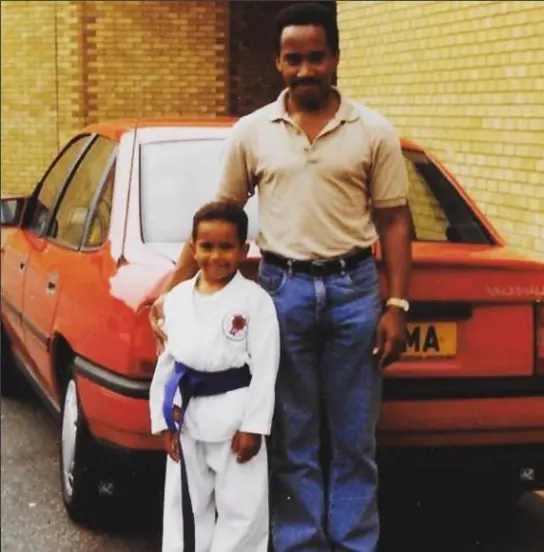 Lewis and Anthony with the family Cavalier
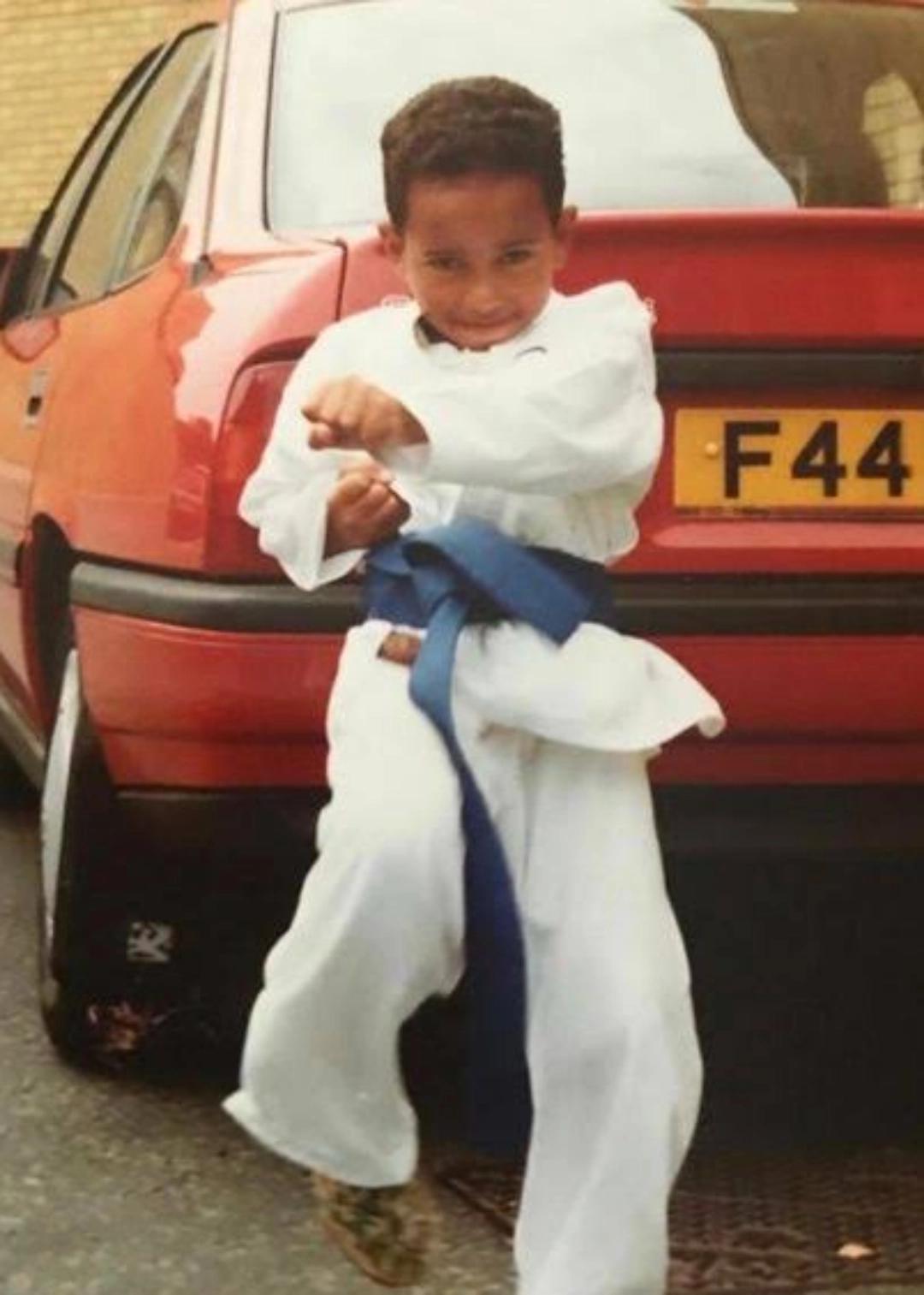 F44, on the back of the family car
“The 44 is my family number. It’s the number I had when I first started racing.”
He has carried it ever since: through karting, through a Formula 1 debut with McLaren in 2007, through seven world championships, and onto the side of a Ferrari, because that was always the dream underneath all the others. On his first day in Maranello, in January 2025, he said part of him had always held on to the idea of racing in red. He made sure there was an F40 with him that day too.
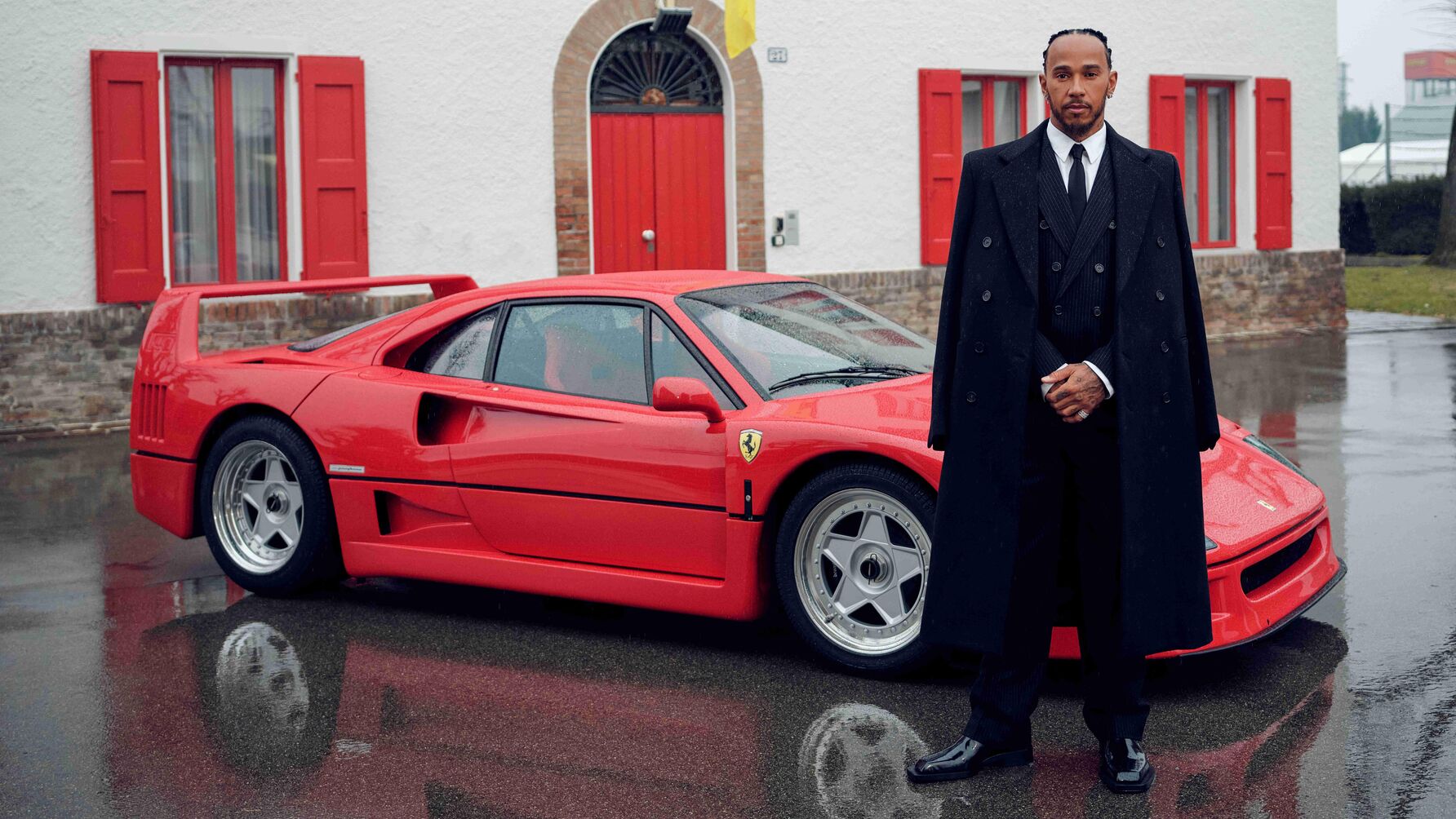
Around the same time, Hamilton stopped collecting cars. He sold the lot, a collection reportedly worth around £13 million, and started buying art instead. Most new cars, he said, had begun to look the same to him. If he ever bought another, it would be an old one, for the sound and the emotion.
At the Japanese Grand Prix earlier that year, he said something bigger. He didn’t just want to own an F40. He wanted to build on one.
“I want to design a Ferrari. I want to do an F44. Baseline of an F40, with the actual stick shift.”
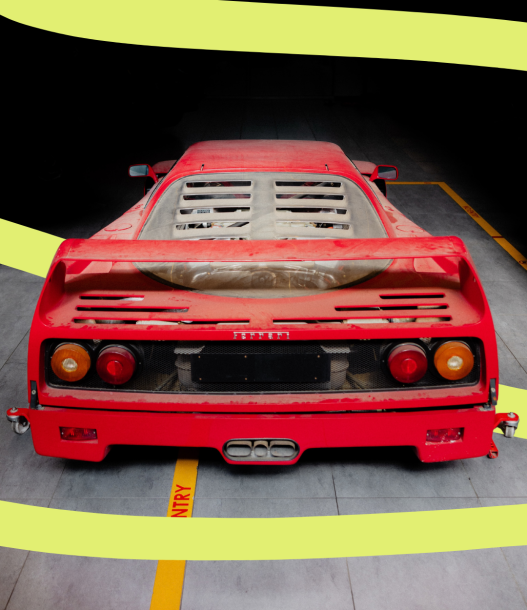
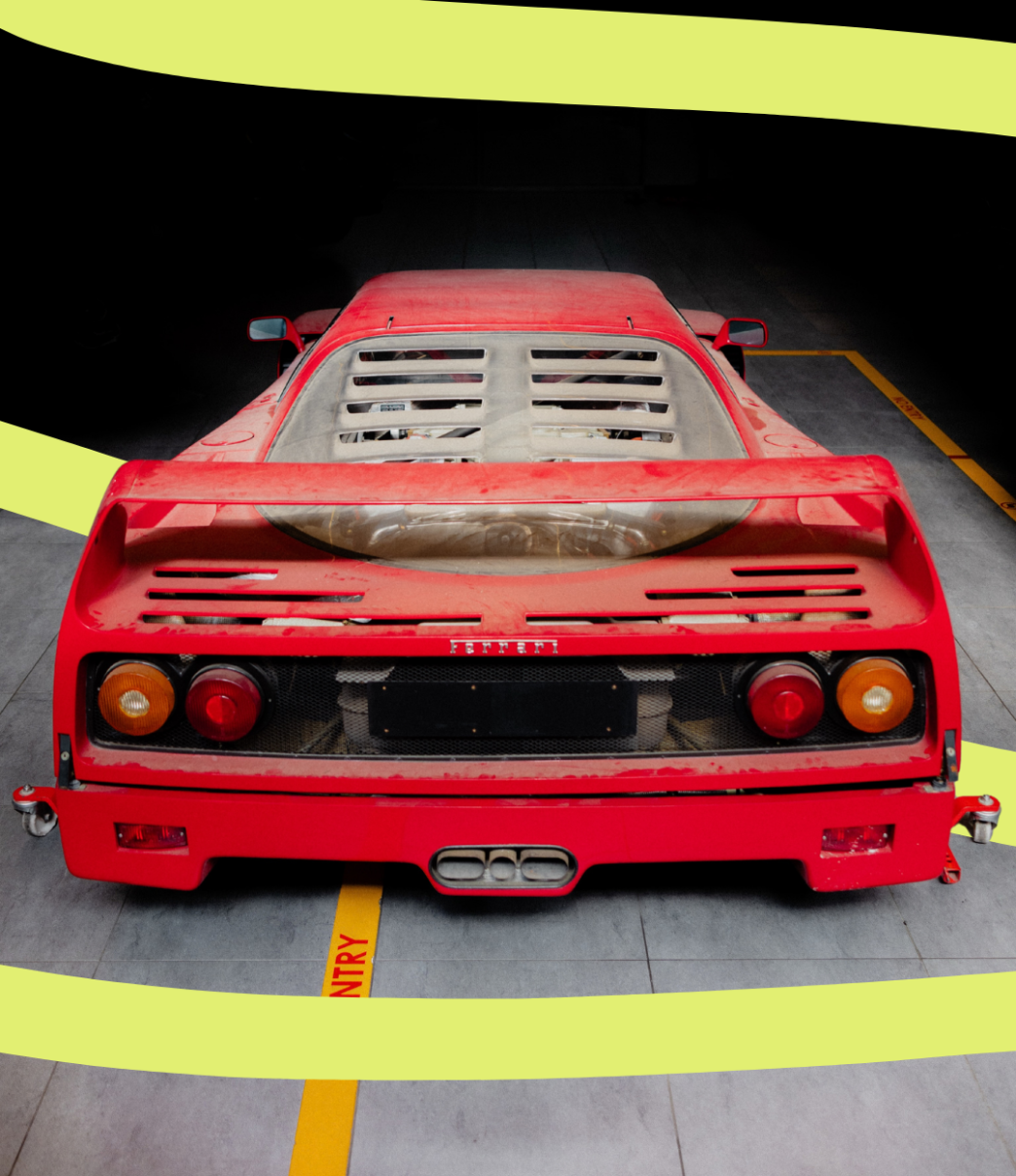
So he went looking, and he was particular about it. Plenty of F40s have been looked after beautifully. He didn’t want a beautiful one. “I wanted a car with a history and low mileage,” he said. What he found had both, in the strangest possible way: a car whose whole history was that it had never been used. Dust over the bodywork, debris in the cabin, dead butterflies and flies inside. The passenger door, by his account, had never even been opened.
“These cars are works of art and incredibly rare, so when I found this one, covered in dust after being sat in a garage for over thirty years, I knew I had to bring her home.”
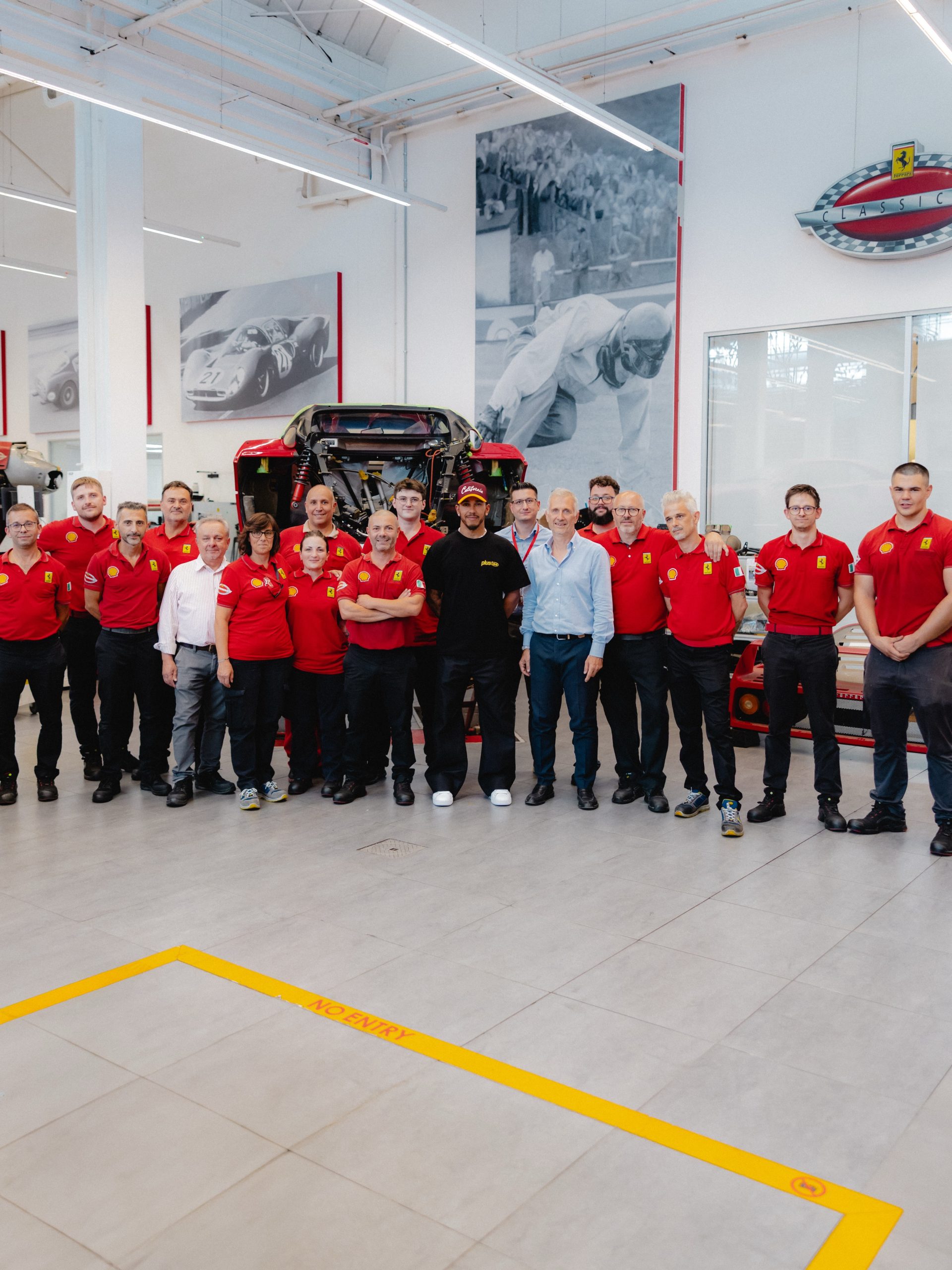
Home meant Maranello. In April 2026 the car went back to where it was built, to Ferrari Classiche, the department set up in 2006 to look after the company’s past. Classiche works out of a workshop inside the factory, with access to the original tooling, Ferrari’s own foundry and an archive holding the assembly sheets of every car the company has made since 1947. If anyone was going to bring this F40 back exactly as it had been, it was the people who made it.
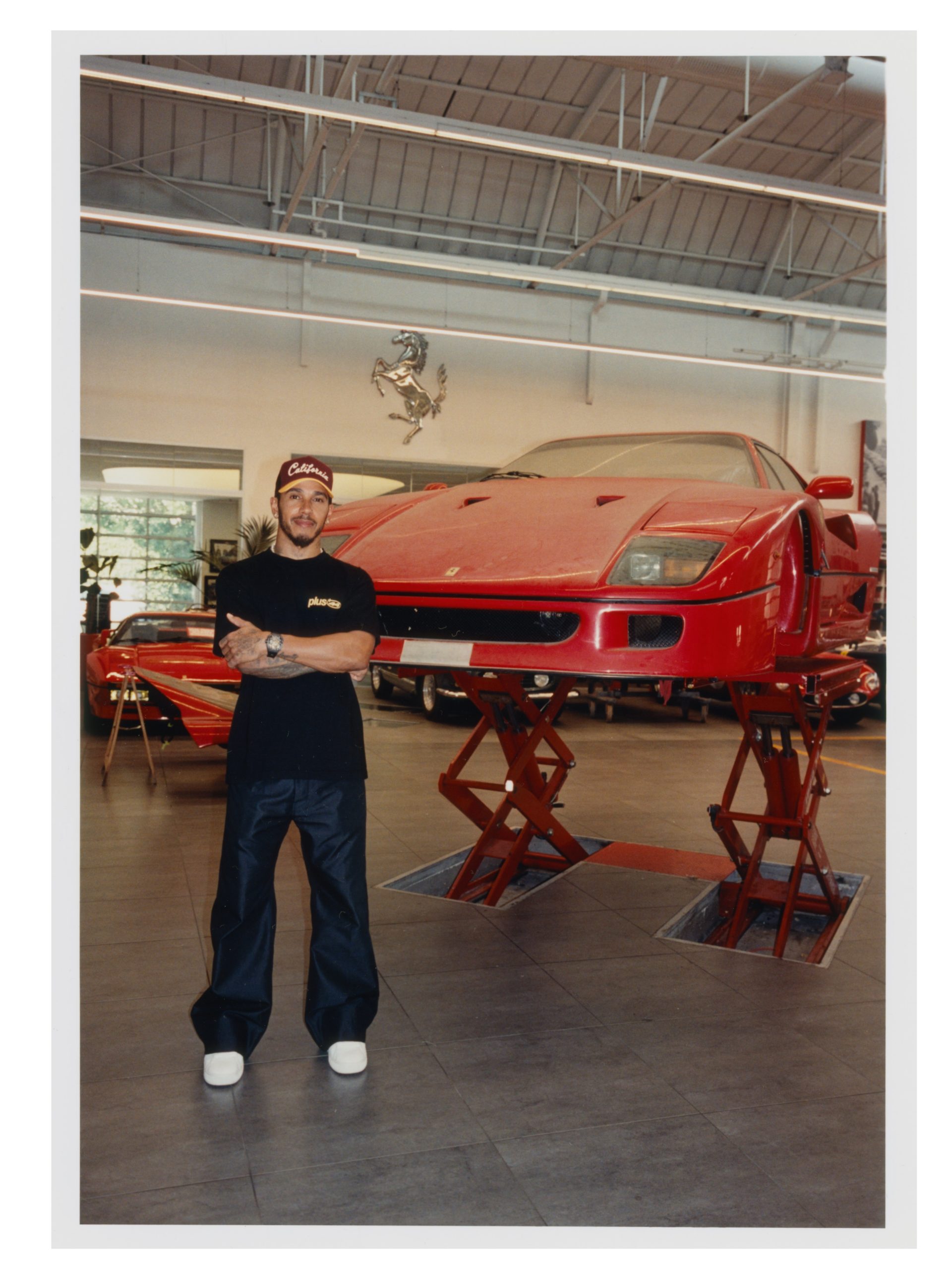
Before they started, Hamilton wondered whether some of the dust ought to stay. It sounds strange, but he had a point. The grime was evidence, the only proof of thirty-five silent years. In the end he decided that keeping the car’s story didn’t mean keeping the dirt. The engine came out. For weeks, engineers and mechanics took the F40 apart and put it back together.
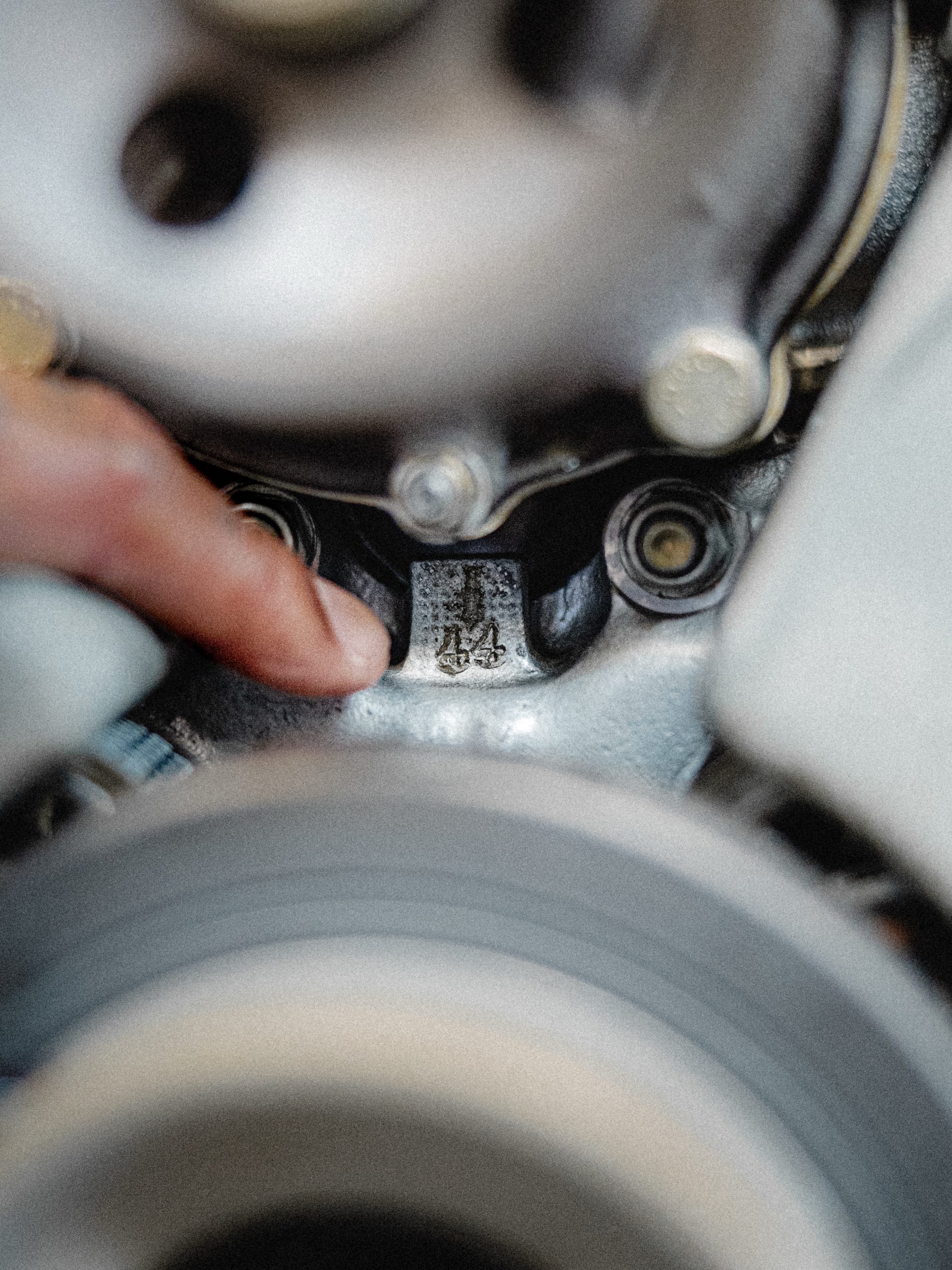
Somewhere in that work, someone looked at the engine and found a number stamped into it: 44. Nobody had known. Not Hamilton when he bought it, not the team when they started. The number his dad had borrowed from a registration plate in Stevenage, more than thirty years earlier, was sitting in the heart of the car his son had wanted since he was small. On camera, Hamilton’s reaction is barely a sentence: “44? Wow. OK.”
“My dream would be for them to restore it, for it to look brand-new, for it to be delivered to Monza, and for me to drive it at Monza.”
When the covers came off, the car that had spent three decades as a dusty secret looked as if it had rolled out of the gate that morning. “It’s simply the most beautiful car,” he said. “I can’t believe how it looks. It really is like new.”
On 3 September, the Thursday of the Italian Grand Prix, he drove it into the Monza paddock himself. After the race, he took it out to the old banking, with 44 on its number plate, just as there had been on the back of the family Cavalier. The concrete there was laid in 1955 so cars could run flat out without touching the brakes. Formula 1 last raced on it in 1961, and today it is a weathered monument curving up into the trees of the park. A place built for speed and now kept for memory: there was nowhere better to bring a car that had been both.
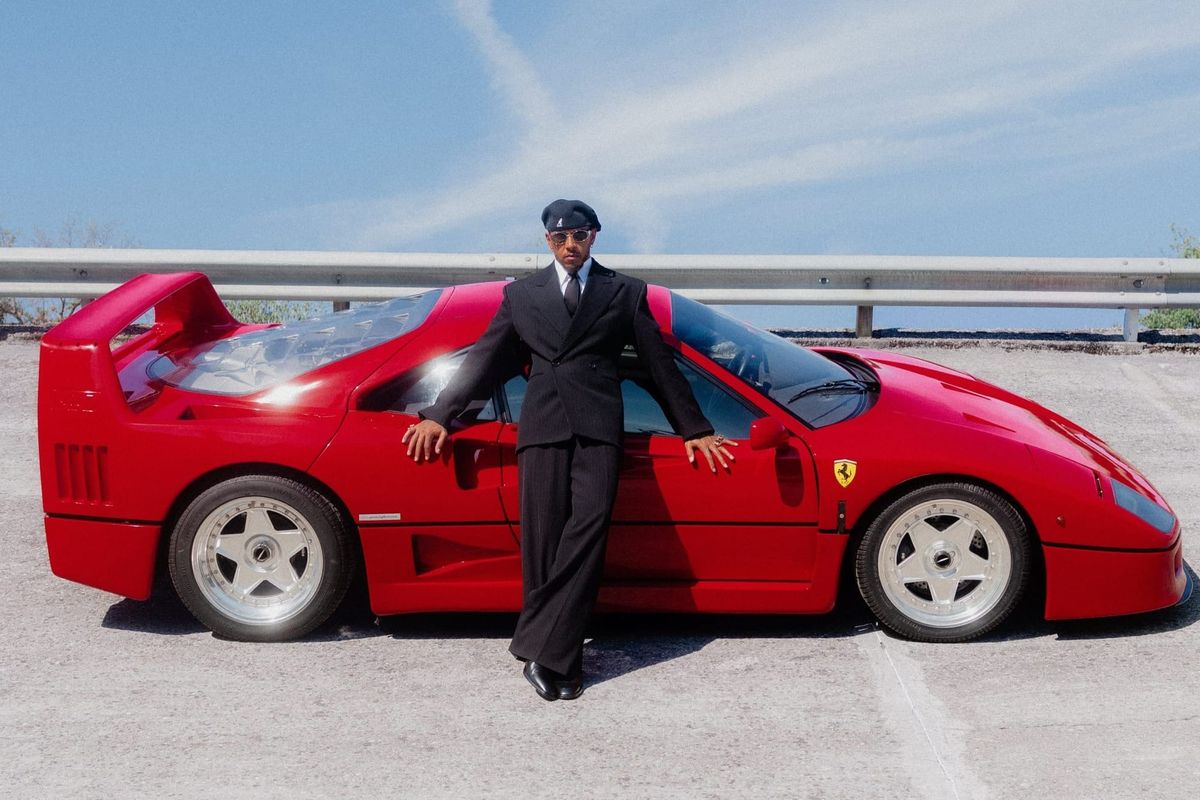 On the old banking at Monza
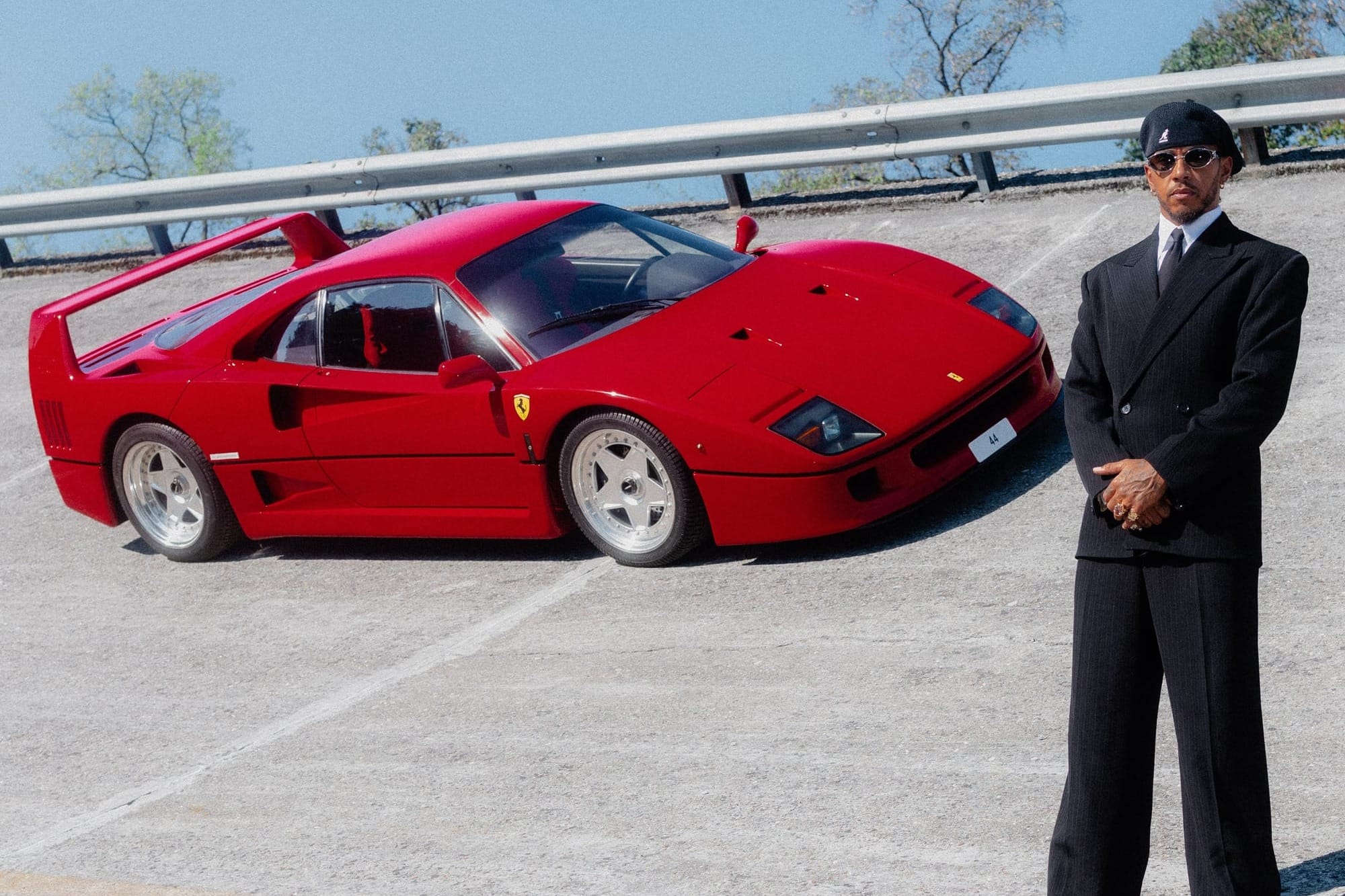 Delivered to Monza, as he asked
There is still the question every collector with a car like this has to answer. Each kilometre he adds is one it went thirty-five years without, and Hamilton has admitted he isn’t sure how much he should drive it. But the F40 was never meant to sit still. Enzo Ferrari didn’t sign off a car with a wire for a door handle and a window onto its engine so it could live under a cover.
It only makes sense when someone drives it. Motor Sport, coming back to it decades later, found an engine that stays docile at modest speeds and holds everything back until the driver asks for it. Classic & Sportscar put it up against the Jaguar XJ220 and the Bugatti EB110, called it far from perfect, and then gave up trying to be measured about it.
“Brutal, ballistic and a bit scary. Magic. No, it really is that good.”
It was never perfect. Neither was the road that brought Lewis to it: a rebuilt kart, a number borrowed from the family car, a father working three jobs to keep him racing. The magic part, however? Written in the stars.
LewisBorn in Stevenage on 7 January.
The F40Ferrari unveils the F40 in Maranello on 21 July. Enzo Ferrari is 89.
The F40Enzo Ferrari dies in August. The F40 is the last new car he presented.
The F40This F40 is delivered, driven 69 km and parked. The engine stays silent.
LewisAnthony Hamilton buys his six-year-old son a radio-controlled car.
LewisLewis, eight, races a rebuilt kart. The number comes off the family Cavalier: F44.
The F40Still in the garage.
LewisFormula 1 debut with McLaren.
LewisFirst day at Ferrari, 20 January. In Baku he says that if he bought a car, it would be an F40.
The F40Arrives at Ferrari Classiche in Maranello in April. The engine turns out to be stamped 44.
LewisDrives it into the Monza paddock on 3 September. After the race, takes it to the old banking.
Enzo Ferrari asked his engineers for the best car in the world and didn’t live long enough to see who would fall for it. It turned out to be almost everyone: film stars and rock drummers, a rapper born in 1991, and a boy in Stevenage who only ever saw it on his bedroom wall. Only one of them got this one, and if you believe in fate, it was always going to be him. The number from the back of his dad’s Vauxhall was already stamped into its engine, waiting for him before anyone knew his name. But like everything else in his life, what comes next is up to him. The kilometres it never did are his to determine now.