







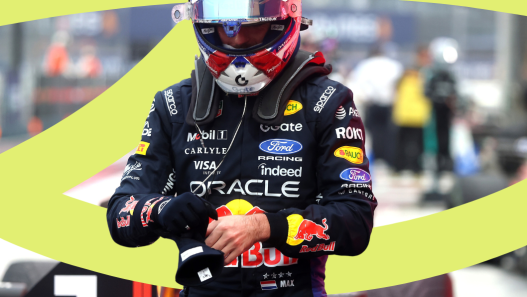


Lando Norris’s race in Baku ended at Turn 1 on lap 36. Franco Colapinto locked up on cold tyres at the Safety Car restart and slid into his own teammate, Pierre Gasly, who was pushed across into the McLaren. None of the three cars went any further. Afterwards Norris said Colapinto should be banned. Colapinto took the blame the same day. It should have ended there, but it didn’t.
“I’m very disappointed with today’s race and I’m really sorry to the team, to everyone at the factory, Pierre and Lando of course, and to everyone who has been supporting us. It was a big mistake on my side and it should not happen.
I locked up with cold tyres, cold brakes, and was out of control. I know the team has done a good job all weekend with the performance of the car so I am really sorry for what happened as we were in a good position to score double points.”
By the next day, the most recent picture on Norris’s Instagram, a post from 17 September with nothing to do with Baku, had gone from under 3,000 comments to nearly 70,000. ESPN reported that much of the abuse aimed at Norris came from accounts backing Colapinto, but the flood reached Colapinto too, and his own posts filled up in the same way. Not all of it was hate. Mixed in with the abuse on both drivers’ pages were hearts, a lot of them, left by people trying to bury it.
Colapinto had spent the build-up to Baku asking for calm, as he has before. “They have to give respect, and that’s what we all want,” he said at Imola last year, asking for it on behalf of every driver on the grid. On Sunday Alpine put out a statement, its second of the season, saying the hate had been aimed at its own driver as well as at rivals and members of the media. The team was careful to add that condemning it was “not aimed at any one fan base or the supporters of one team or driver.”
“Nobody should be subject to hateful or abusive comments.”
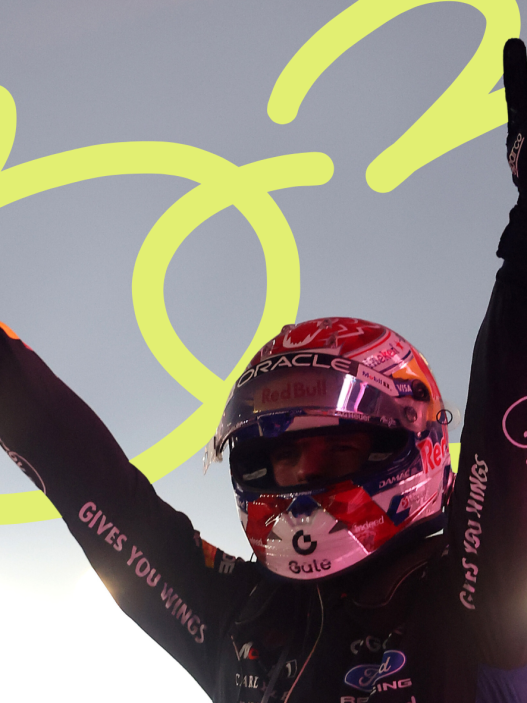
You are allowed to think Norris was wrong. Max Verstappen came to Colapinto’s defence, and plenty of fans agree with him. That is the sport working the way it should: drivers disagreeing in the pen, fans arguing about it in the grandstands and online, a penalty that half the crowd thinks is too soft and the other half thinks is too harsh. None of it needs anyone to send a single abusive message.
It has been like this all year, and it has run in every direction. In March, after a collision with Colapinto in China, Esteban Ocon took full responsibility and went looking for him in the media pen to apologise. He received death threats anyway, and Colapinto’s own management stepped in to ask for it to stop. Two weeks later at Suzuka, Oliver Bearman hit the barrier at 50G avoiding Colapinto’s much slower car. The FIA put it down to the closing speeds of the new cars and took no action, and the abuse turned on Colapinto instead.
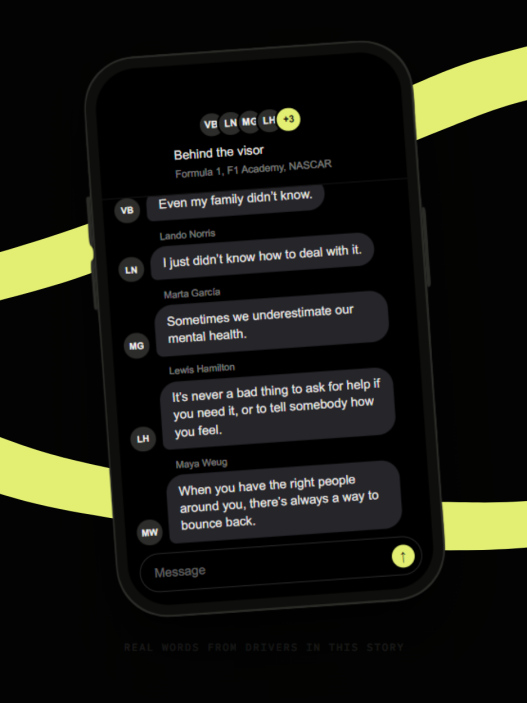
Norris has been here before, as the driver speaking up for someone else. In December 2021, Nicholas Latifi crashed his Williams with five laps to go in Abu Dhabi, and the Safety Car that followed decided the world championship. What came back at him was thousands of messages, some of them threats against his life, and they reached the people closest to him too. When he went into London for a day that winter, he took a bodyguard. In an open letter he said he knew a thick skin came with being an athlete, and that what shocked him was the extreme tone of the hate. But he was more worried about someone else. “It concerns me how somebody else might react if this same level of abuse was ever directed at them,” he wrote. Norris, asked about it at the time, said Latifi “deserves none of it in any way.”
While Latifi was abused over a crash, Lewis Hamilton has been abused for who he is. He is the first and only Black driver in Formula 1’s history, and for as long as he has raced in it, the racism has come at him in person as well as online. At a test in Barcelona in February 2008, a group of spectators blacked up their faces, put on wigs and shirts reading “Hamilton’s family”, and shouted racist abuse at him from the stands. Thirteen years later, hours after he won the 2021 British Grand Prix following his first-lap collision with Verstappen, racist messages appeared under his team’s posts. Formula 1, the FIA and Mercedes condemned them together. Red Bull, whose driver had spent that afternoon in hospital, put out its own statement: “While we may be fierce rivals ontrack, we are all united against racism.”
The next summer a recording surfaced of Nelson Piquet, a three-time world champion, using a racial slur about Hamilton while talking about that crash. A Brazilian court later ordered Piquet to pay five million reais, directed to funds for racial equality and against discrimination of the LGBTQIA+ community. Hamilton’s reply was short.
“I’ve been surrounded by these attitudes and targeted my whole life.”
Hamilton’s answer has been to change who gets into the sport. In 2020 he set up the Hamilton Commission with the Royal Academy of Engineering to find out why so few Black people work in motorsport. Its report the following July estimated that only one per cent of people working in Formula 1 came from Black backgrounds, and found racist comments inside the industry being waved away as banter. That same month he put £20 million of his own money into Mission 44, a foundation that backs young people from under-represented backgrounds into education and careers, and set up Ignite with Mercedes to do the same inside motorsport. By its second year, Mission 44 was supporting 33 organisations, including its first in Brazil and the United States. It is patient work, measured in years.
The abuse runs on a different clock. It arrives in seconds, and it does not stop at the driver. Norris talked about that in 2022, when it had started reaching his then girlfriend, who had never watched a race before she met him. “I want to protect her,” he said, and admitted that he reported what he could, but there was simply too much of it to get through.
It is not only motorsport. When England lost the Euro 2020 final on penalties, Marcus Rashford, Jadon Sancho and Bukayo Saka, who was 19, were racially abused online through the night. Rashford’s reply came the next day.
“My penalty was not good enough, it should have gone in but I will never apologise for who I am and where I came from.”
Elsewhere the abuse has found a new engine in betting, and the messages arrive the moment a result goes the wrong way for someone’s stake. After a third-round loss at the 2021 US Open, Sloane Stephens, a former champion there, said she had received more than 2,000 messages of abuse, among them racist slurs and threats of violence. Her post began: “I am human.” After a first-round loss in New York in 2024, Caroline Garcia shared messages telling her to end her life and others threatening her family.
“This type of hate is so exhausting and never ending.”
In basketball, Alyssa Thomas of the Connecticut Sun said after the 2024 WNBA playoffs that in 11 years in the league she had never been called the things she was called on social media that season. “We come to play basketball for our job, and it’s fun,” she said, and asked for something to be done about the rest of it. The WNBA said it would involve law enforcement where it had to. In the NBA, J.B. Bickerstaff, then coaching Cleveland, said gamblers had found his phone number and were sending him messages “about where I live and my kids.”
“Any shoe that we wear, any jersey we have on, we’re human.”
Graham Gano is 38 and has kicked in the NFL for 17 seasons. Last November he said that ever since sports betting arrived, he gets messages every week telling him to end his life, because a kick he made or missed cost someone money. He said it while a herniated disc was keeping him off the field, and added that after this long, he was used to it. “I just want to play ball,” he said. In baseball, Lance McCullers received threats against his children after a bad start in 2025, and Houston police traced them to a drunk bettor overseas. This month the NFL, NBA, MLB, NHL and MLS and their players’ unions wrote to gambling regulators in 35 states and Washington, D.C., asking for anyone who threatens an athlete or their family to be banned from sportsbooks for life. Last week the NBA and WNBA followed with a letter of their own.
In Japan, what it can cost is now written into law. Hana Kimura was a 22-year-old professional wrestler who became a fan favourite on the reality series Terrace House, and in 2020, after months of abuse online, she died by suicide. Two men who had sent her messages were each fined 9,000 yen, less than a hundred US dollars. Her mother, Kyoko, a former wrestler herself, spent the next two years campaigning, and in 2022 Japan made online insults punishable by up to a year in prison. “I want people to know that cyberbullying is a crime,” she said the day it passed.
The record
It keeps happening
Not just Formula 1. The same pattern runs through football, tennis, rugby and the US leagues.
- 2026
Norris, after Baku F1
Abused across his social media after calling for Colapinto to be banned. Alpine condemns the reaction the next day.
- 2026
US leagues, to regulators US sports
The NFL, NBA, MLB, NHL and MLS ask 35 states for lifetime sportsbook bans for anyone who threatens athletes or their families.
- 2026
Colapinto, after Suzuka F1
Targeted after Bearman’s 50G crash, which the FIA put down to the closing speeds of the new cars.
- 2026
Ocon, after China F1
Death threats after a collision he took full responsibility for and apologised for in person.
- 2025
Gano, in the NFL NFL
A 17-season kicker says bettors message him every week telling him to end his life.
- 2025
Tsunoda, after Imola F1
Death threats after a practice incident at Imola.
- 2025
Reese, in the WNBA WNBA
The league investigates reports of racist fan comments aimed at Angel Reese in Indianapolis, then says it cannot substantiate them.
- 2024
Vinícius Júnior, in La Liga Football
Three Valencia fans who made monkey chants at him are given eight-month sentences, the first conviction for racist abuse inside a Spanish stadium. Source
- 2024
Thomas, in the WNBA WNBA
Says she has never been called the things she was called online that season. The league warns it will involve law enforcement.
- 2024
Canapino, in IndyCar IndyCar
Agustín Canapino stepped away from a race, citing the growth of online abuse and harassment after an incident with Théo Pourchaire.
- 2023
Foley, after the World Cup final Rugby
The TV match official steps away from international rugby after death threats to him and his family. Referee Wayne Barnes, who also spoke about abuse, retires days after the final. Source
- 2022
Piquet’s slur surfaces F1
A three-time champion’s racial slur about Hamilton becomes public. A Brazilian court fines him in 2023.
- 2021
Latifi, after Abu Dhabi F1
Death threats after the crash that brought out the title-deciding Safety Car. He hires a bodyguard.
- 2021
Stephens, at the US Open Tennis
More than 2,000 abusive messages after a third-round loss, including racist slurs and threats.
- 2021
Hamilton, after Silverstone F1
Racist abuse online after the British Grand Prix. F1, the FIA and Mercedes condemn it together.
- 2021
Saka, Rashford and Sancho, at Euro 2020 Football
Racially abused online after missing penalties in England’s shootout defeat in the final. Twitter removes 1,961 posts in the three days that follow. Source
- 2008
Hamilton, in Barcelona F1
Spectators in blackface abuse him at pre-season testing. The FIA responds with an anti-racism campaign.
Formula 1Other sports
Formula 1 has tried. It launched Drive It Out in 2022 with every driver on the grid in the video, and one line from it has stuck: “If you cannot be respectful then don’t be part of our sport.” The FIA built United Against Online Abuse after a race steward was abused online the same year.
None of it works unless the people in the grandstands and the comment sections decide it matters. We cover this sport from both sides of the fence, the stands and the paddock, because we love it from both. The rivalries are part of that love, and so are the arguments: a strategy call you think is wrong, a stewards’ decision that makes you furious, a crash that ends your driver’s race.
Racist abuse is not part of it. Death threats are not part of it. Piling onto a driver’s page because they said something about your driver is not part of it either, and it does nothing for the driver you think you are defending. If you see it, report it and block it. If it is coming from people who wear the same colours as you, say so.
Some fans are already doing something about it. The hearts that were there from the start have kept coming under Norris’s posts and Colapinto’s, row after row of them, pushing the abuse further down the page. They are answering one flood with another.
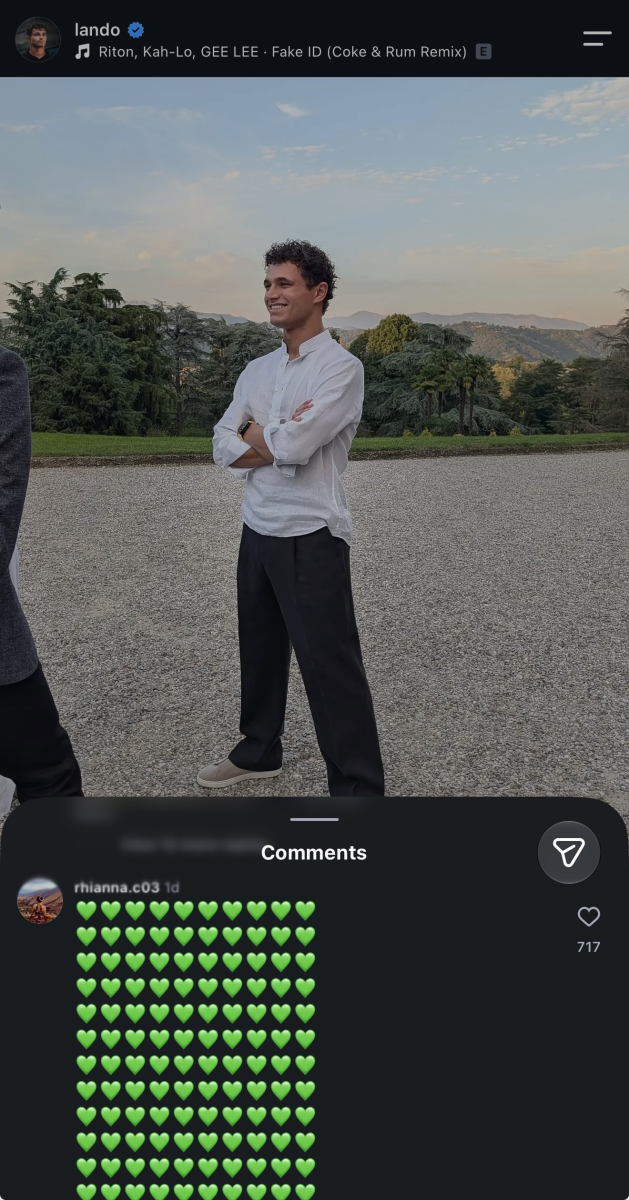
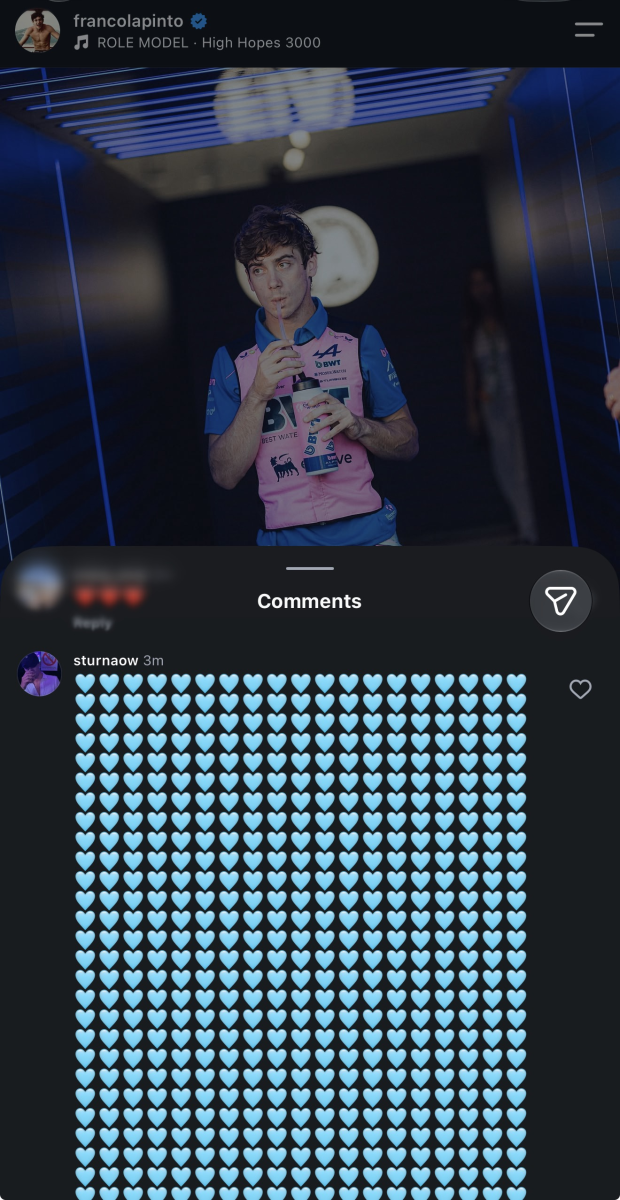
On Sunday, Norris and Colapinto will line up on the grid at Sepang, a 26-year-old and a 23-year-old who have spent most of their lives chasing this. Both have had things said about them this week that nobody should have to read. And by the end of the night there will be new comments, maybe with new names on the receiving end, but if this weekend is anything to go by, the hearts will get there first. Finally.