





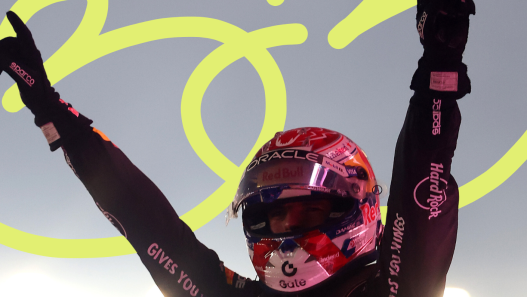

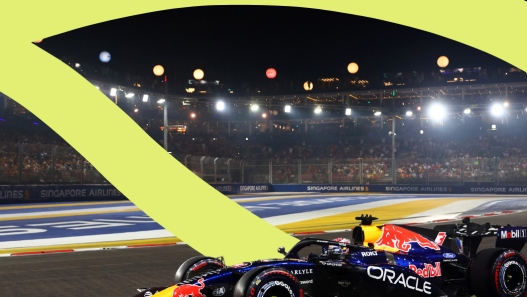

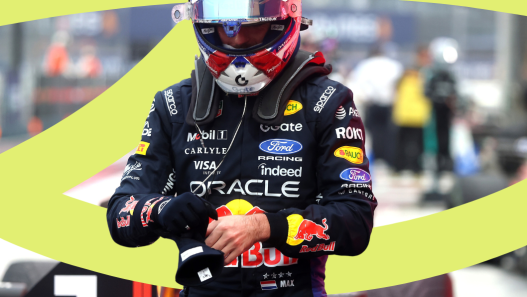
The lap is over, and it isn’t good enough. The driver knows before the timing screen does. A breath, a click of the radio button, and then the words every Formula 1 fan has heard a thousand times: “Let’s keep pushing.”
It’s the phrase of this sport. I’d bet it’s the one we hear more than any other. A driver, minutes after a bad race, is asked what comes next, and the answer is “I’ll keep pushing.” Keep going, keep working, keep moving forwards, keep looking ahead. Keep pushing.
But some days, some months, some years, they push back. And continuing to push forwards seems impossible. Maybe we look to friends or family to help work through what we’re feeling, by putting words to what those forces pushing against us are, the ones that leave us still or slide us backwards.
But some days, some months, some years, they push back.
But maybe some of us can’t put words to it just yet. Can’t reach out to anyone else. We might look to something outside of us and our community instead. A song, a book, a film, anything where a stranger feels what we feel or overcomes what we are trying to overcome. Some of us turn to a sport, like this one. We are looking for something to get excited about or get lost in, and we stumble upon these athletes fighting impossible odds. They seem objectively strong. Nothing seems to get to them. Nothing seems to stop them from pushing. It can make us question ourselves, or confirm the belief that our struggle is a lonely one. But we must remember that things are not always what they seem.

This week, Valtteri Bottas rode a bicycle from Sepang to Singapore. Four days and 419.67 kilometres, along coastal gravel tracks and through the plantations, some of it in the dark. Watch that, and it looks as if nothing could ever stop him. In April, before his 250th Grand Prix, he wrote about the years when something nearly did.
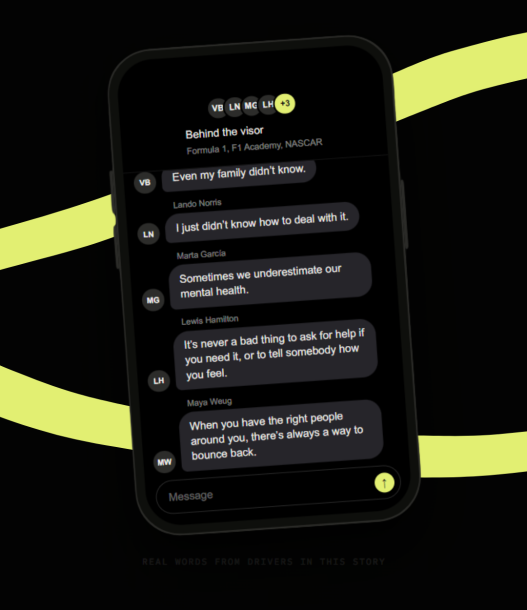
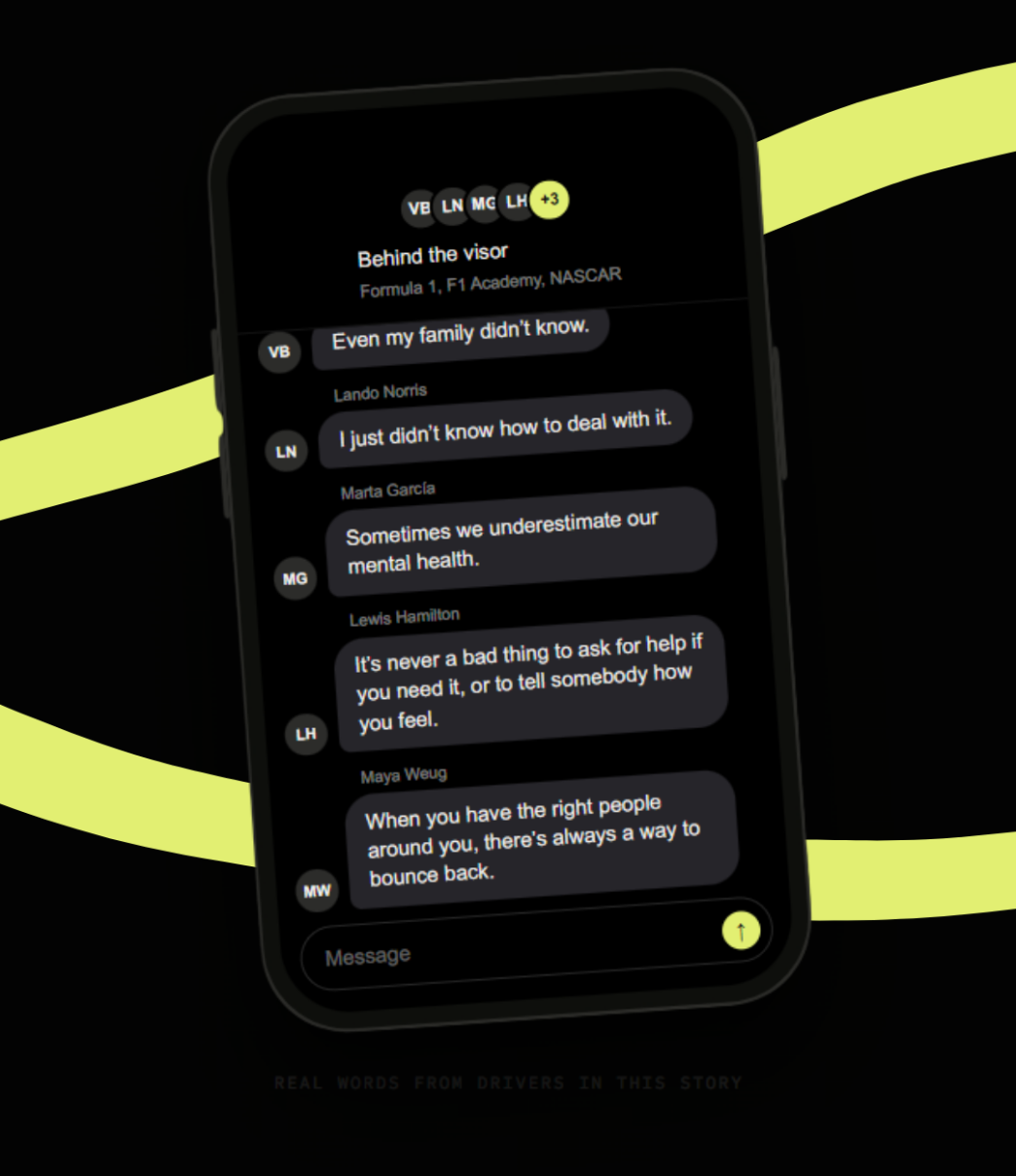
“I kept everything from my team and even my teammates. Even my family didn’t know… It took me almost two years to feel like myself again. It’s funny because if you just watched my races, you probably wouldn’t know anything was wrong.”
He is not the only one. Lando Norris, now a world champion, said in 2023 that he struggled “quite a bit” in his first two seasons. “I just didn’t know how to deal with it. I kept all of it inside and it really hurt my self-belief and self-confidence, which got to an all-time low. I doubted myself.” A year earlier, Lewis Hamilton, a seven-time world champion, wrote to his fans that he had “struggled mentally and emotionally for a long time,” that keeping going was “a constant effort,” and then turned it outwards: “I’m writing to tell you it’s ok to feel the way you do, just know that you are not alone and that we are gonna get through this!”
And it isn’t only the drivers at the very top, or only Formula 1. Go looking and you find the same story told in every paddock in the world, often by the people who looked strongest of all.
Romain Grosjean climbed out of a burning car in Bahrain in 2020, his Haas torn in two, and walked away from it. The part nobody saw came afterwards. “I worked with a psychologist after it,” he said the following year, “just to make sure there were no flashbacks or nightmares or anything bad coming from it.” He came out the other side holding something he never went looking for: “I was so close to not being here anymore that it makes you realise how beautiful life is.”
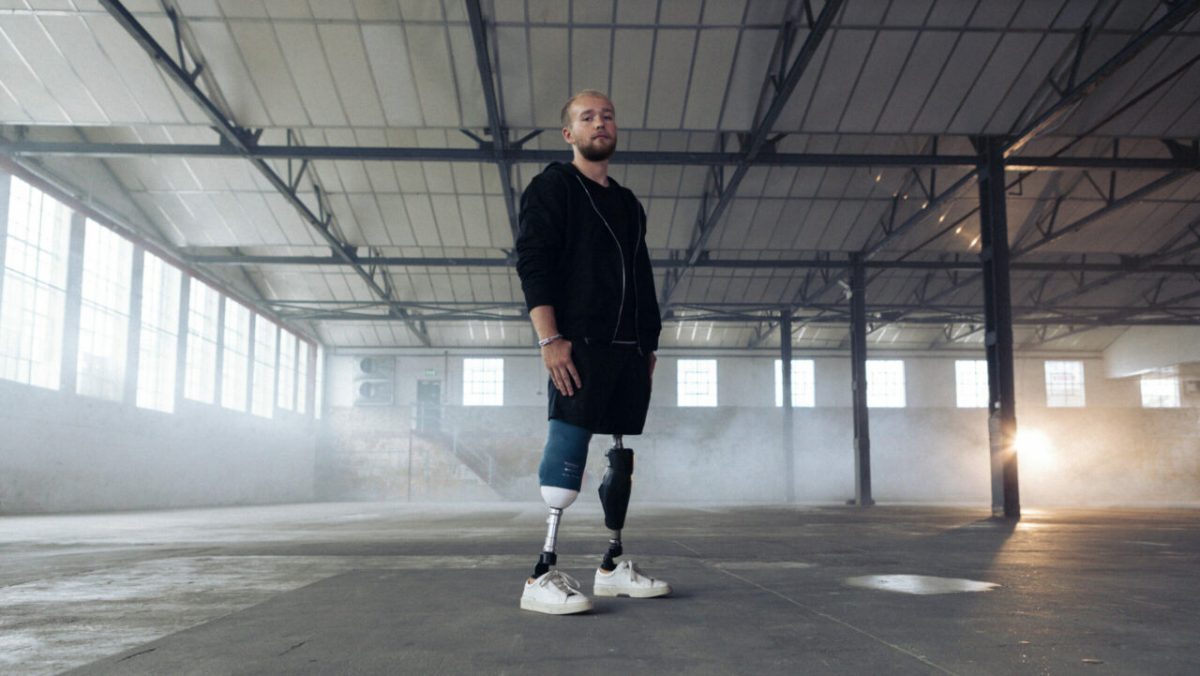
Robert Wickens was paralysed in an IndyCar crash at Pocono in 2018 and came back to race with hand controls. Five years on, chasing a sportscar title, he credited “a lot of work with psychiatry and my sports psychologist” for getting him there, and said his life now had “a slightly different meaning.” Billy Monger lost both of his legs in a Formula 4 crash at seventeen. Today he looks back on “those dark times” and feels “just pride more than anything.” What he went through taught him that “things are doable and you can get through them.”
Some never had a crash to point to. Alex Albon was promoted to Red Bull, then dropped, and by the end of it, he said, “mentally I had no energy left.” He had people who loved him and still felt it: “I had my family but I was just going about it alone.” Rebuilding at Williams, he put a team around himself, a psychologist among them, because “I need to care about myself more than other people.”

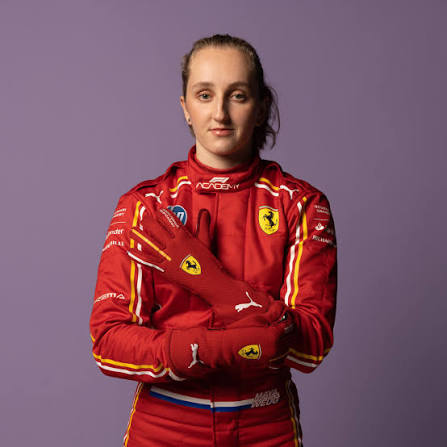
Some of the hardest seasons are fought further down the ladder. In 2024, after a weekend that left her with nothing, Ferrari junior Maya Weug said that when “you’re trying everything and nothing is working, then you feel useless,” and that “when you have the right people around you, there’s always a way to bounce back.” She did bounce back, and fought for the F1 Academy title until the final round of 2025, losing it by fifteen points. This year, left without a race seat, she wrote: “I don’t really know how to write this one. I’ve been trying to show you the positives all season, but the truth is this has been the toughest year of my career by far.” Then came the line that stays with you: “The people close to me keep telling me that when one door closes, another one opens, and I’m choosing to believe them.”
Marta García withdrew from a W Series race in 2021. Looking back, she said she “had a bit of mental health issues” that year and was “putting too much pressure on myself.” Then she “started working with sports psychologists and clinical psychologists and everything worked better.” Two years later she became the first F1 Academy champion. Bianca Bustamante has spoken about the “personal battles that no one knows of,” and about what changed when McLaren gave her a sports psychologist: the chance “to talk about how I feel, how I deal with pressure.” And Abbi Pulling, who followed García as champion in 2024, made the mental side her focus that season and found a way of saying it that sticks: “I always say a happy Abbi is a fast Abbi.”

Sometimes the weight comes from outside. After his crash in the 2021 title decider, Nicholas Latifi wrote that “what shocked me was the extreme tone of the hate, abuse, and even the death threats I received.” He chose to speak about it anyway: “If sharing my thoughts, and highlighting the need for action, helps just one person, then it was worth it.” Katherine Legge received death threats after a NASCAR crash in 2025 and answered them on her own podcast: “Luckily, I have been in tougher battles than you guys in the comment sections.” It is a story this sport keeps having to tell.
The drivers you see as superheroes are human. They are pushing against forces every day, just like you. It may not be the same task physically, but it is the same feeling mentally. And they have looked to something or someone outside of themselves for help. “It’s never a bad thing to ask for help if you need it, or to tell somebody how you feel,” Hamilton wrote in 2020. For World Mental Health Day in 2024, McLaren sat Lando Norris and people from across the team down and asked each of them to do one small thing: phone someone they love, for no reason at all. A few admitted they hate making calls. Then they picked up the phone.
George Russell started seeing a psychologist after a crash left him at what he called “a very low point in my career,” and found himself walking out of those sessions “feeling like there had been a weight lifted off my shoulders.” His advice is the simplest of all: “not to be ashamed about talking to somebody. Whether that is a friend, or a colleague, or a member of your family, or reaching out to a professional.”
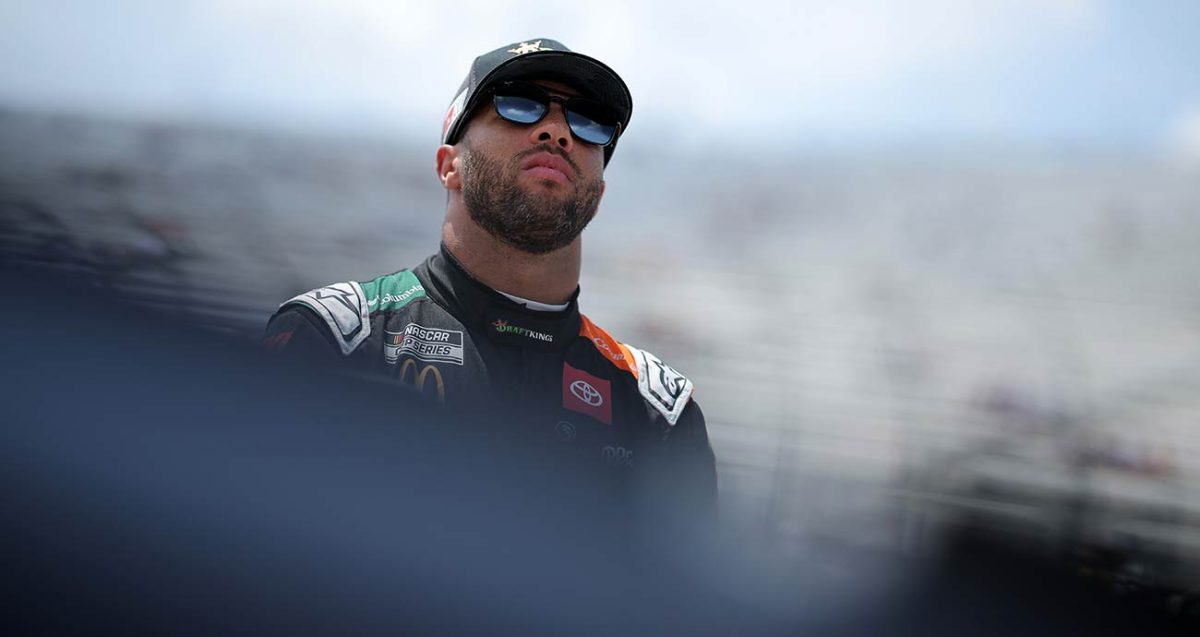
Bubba Wallace has spoken openly about his depression since 2019. In 2023, the year his best friend Ryan Blaney won the NASCAR championship, it came back, and he wrote to anyone sitting where he was sitting: “To my peeps out there staring at a blank wall, I’m with you.” And then, in the same breath, a line that could have come straight over a team radio: “Tomorrow is another day. Another opportunity. Keep after it.”
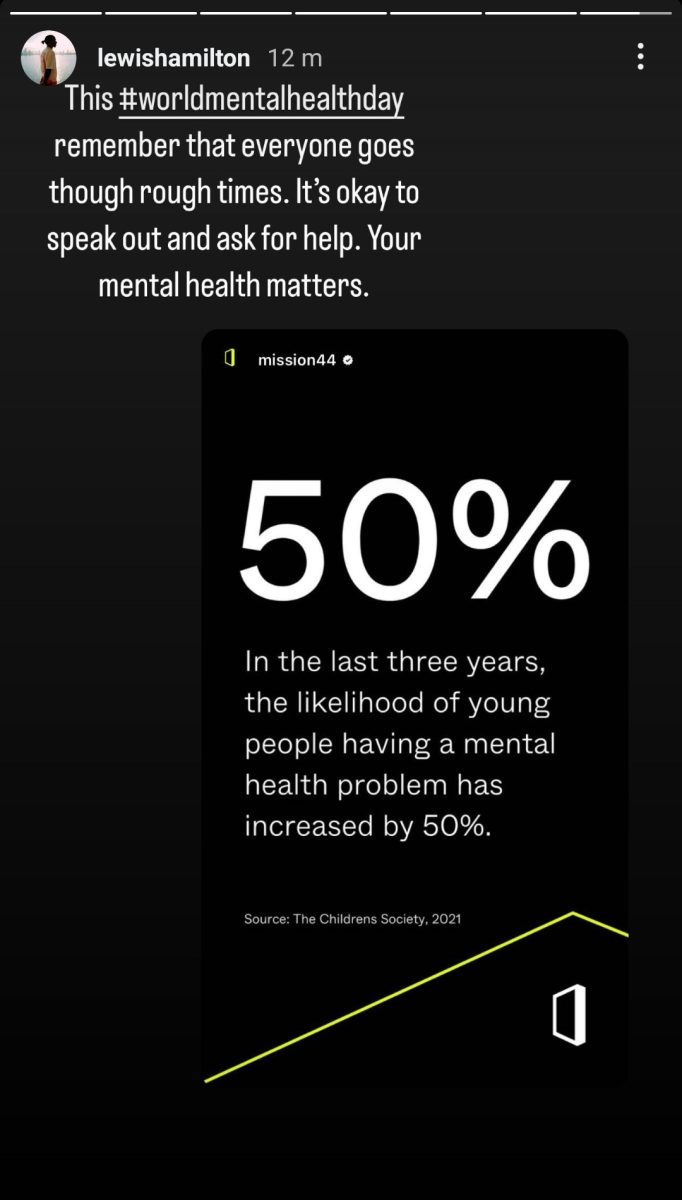
This year’s World Mental Health Day theme, set by the World Federation for Mental Health, is “Lived experiences heard: real voices, real change.” Every voice in this piece is exactly that: someone who looked unbreakable from the outside, choosing to tell the truth about the inside, so that somebody else might feel a little less alone.
And sometimes keeping going means stopping for a moment. Marta García stepped out of a race. Daniel Ricciardo spent a year out of a race seat because, he said, “deep down I was just craving a bit of distance.” Even the fastest car on the grid has to come in for fresh tyres. Nobody calls that giving up. They call it a pit stop.
So, this World Mental Health Day, remind yourself that you’re not alone. Don’t push through alone. Reach out to a friend or a family member. Do it again the day after, for yourself and for them. Reach out to a professional. Call a helpline. There is no shame in it, only strength. Never push alone, because we must keep thriving as we keep pushing;